
Trespass and road-related area disputes in NSW Nominal Defendant claims
In a NSW CTP Nominal Defendant claim, trespass and road-related area arguments can decide whether the statutory claim pathway is available at all. The practical answer is evidence-led: identify the exact accident point, test whether the place was a road or road-related area, prove how the public actually used it, and deal carefully with any allegation that the injured person was not allowed to be there.
This is general information for NSW motor accident claims. It is not a prediction about any particular claim, and the result can depend on statutory wording, insurer decisions, medical evidence, fault issues and time limits.
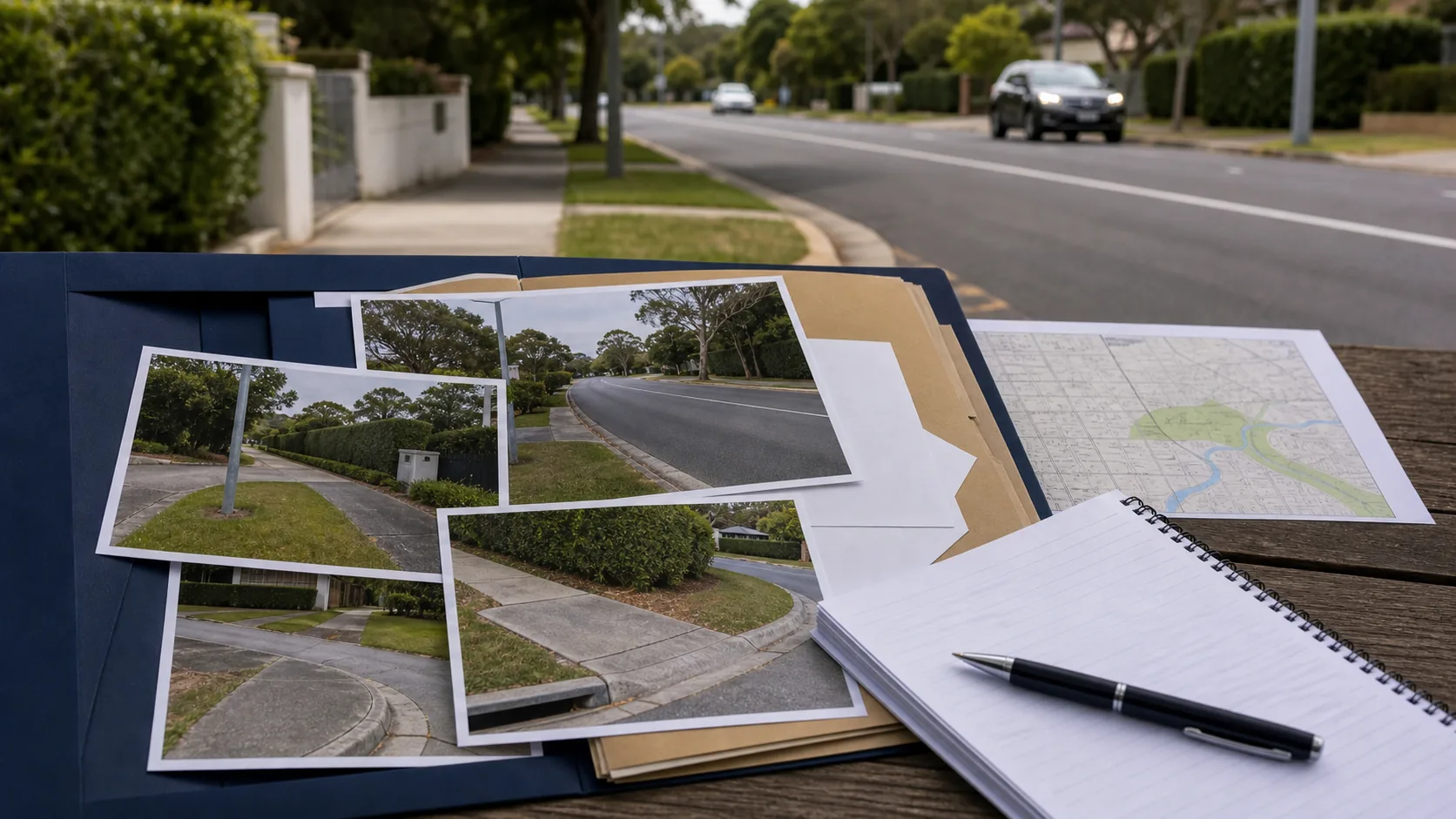
Answer first: why the location issue matters
The Nominal Defendant scheme can be important where the at-fault vehicle is unidentified or uninsured. But before the dispute reaches injury severity or damages, the claimant may need to show the accident occurred in a place covered by the NSW CTP framework. That is why a car park, dirt track, private driveway, reserve road, loading area or informal access road may become a legal battleground.
The difficult cases are rarely solved by a label. Calling land private, commercial, public, gated, open or a road-related area does not end the inquiry. The evidence usually needs to show what the place physically was, who could use it, how it was used in practice, and whether any restriction or trespass issue changes the statutory analysis.
Evidence that usually matters
Location evidence is strongest when it is gathered early and from more than one source. A later dispute may turn on small details that disappear quickly, such as temporary signs, an unlocked gate, worn tyre tracks, a public access pattern, or a change in how the land is managed.
| Issue to prove | Useful evidence | Why it helps |
|---|---|---|
| Exact accident point | Marked map, scene photos, dashcam, CCTV, police and ambulance descriptions | A few metres can change whether the accident is treated as on a road, shoulder, driveway, car park, track or private area. |
| Public access and public use | Witness statements, business records, council records, Google Street View, signs, gates and line markings | Road-related area arguments often depend on how the area was actually used, not simply who owned the land. |
| Trespass or permission dispute | Entry conditions, warning signs, membership rules, customer-only notices, landowner records and prior access practice | If the insurer says the claimant was not permitted to be there, the response should address the actual rule and the practical access history. |
| Nominal Defendant pathway | Unidentified or uninsured vehicle evidence, due inquiry records, insurer correspondence and early claim forms | The location question usually sits beside separate threshold issues about the vehicle, search steps and claim timing. |
- scene photos showing the road, shoulder, driveway, track, car park, gate, fence, bollard, sign or entry point
- police event material, ambulance records, hospital records and early GP notes describing where the crash happened
- witness evidence from residents, workers, nearby businesses or regular users about public access and public use
- maps, satellite imagery, dashcam, CCTV, Google Street View and screenshots showing the layout at the relevant time
- council, landowner, occupier, strata, shopping centre, club or managing authority records about control and permitted access
- evidence of any permission, prohibition, membership rule, customer-only condition, construction closure or warning sign
Trespass is not always the whole answer
Trespass may be central where the claimant relies on a road-related area because the land was open to or used by the public for driving, riding or parking. If the claimant was not permitted to be there, the insurer or Nominal Defendant may argue that the site falls outside the relevant pathway or that public-use evidence does not assist the claimant.
But the analysis should remain careful. A person being on privately owned land does not automatically mean the land lacks public character. Equally, a place being physically accessible does not automatically prove it was open to the public in the required sense. Decision-makers may look at practical use, restrictions, signage, physical barriers, the type of users, the reason vehicles came onto the land, and whether access was general or confined to a limited class.
The claimant response should separate three questions: where exactly did the accident happen, what statutory category might cover that place, and what evidence answers any trespass or permission allegation. Keeping those questions separate makes the issue easier for an insurer, internal reviewer or the Personal Injury Commission (PIC) to assess.
How to frame the dispute without overclaiming
A useful response does not simply argue that the place looked like a road. It should connect the physical site, the statutory wording and the available proof. If the insurer says the area was private land or that the claimant was trespassing, answer that precise reason rather than sending a general Nominal Defendant submission.
Separate the legal issues
- whether the vehicle was unidentified or uninsured for the Nominal Defendant pathway
- whether the accident point was a road or road-related area at the relevant time
- whether public access was genuine, restricted, tolerated or prohibited
- whether the insurer's objection also raises due inquiry, claim timing or fault issues
Build a source-aware bundle
- attach a marked map and current or historical imagery of the access point
- quote the insurer's exact reason so the response stays focused
- include independent records before relying on a claimant recollection alone
- keep a deadline diary for any internal review or Personal Injury Commission filing
This kind of framing improves the claim file without promising an outcome. The decision can still depend on the current legislation, the Motor Accident Guidelines, the evidence, insurer reasoning and any later PIC or court assessment.
Official sources to check before arguing the point
A location objection should be checked against current NSW source material, not answered from memory. Start with the statutory framework, then compare it with SIRA guidance and the insurer's exact reasons.
- SIRA's injured person guide explains the Nominal Defendant pathway for unidentified or uninsured vehicles on a NSW road or road-related area: Guide for people injured in a motor vehicle accident.
- SIRA's Motor Accident Guidelines include claim handling rules and timing guidance for Nominal Defendant statutory benefits claims: Part 4 of the Motor Accident Guidelines.
- NSW legislation should be checked for the current road, road-related area and Nominal Defendant provisions before relying on a case-note summary: Motor Accident Injuries Act 2017.
Process step
Build the location chronology before lodging or disputing the claim. Record where the vehicle came from, where it entered, the accident point and where witnesses or cameras were located.
Evidence risk
Do not wait for a dispute before collecting proof. Signs, barriers, CCTV and access arrangements can change, and later recollections may be less reliable than contemporaneous records.
Legal caution
Avoid absolute conclusions. The location issue may interact with fault, due inquiry, insurer allocation, statutory benefits, common law damages and limitation questions.
Practical next steps if the insurer raises a location objection
- Ask for the precise reason the insurer says the location is not covered, including whether the issue is road, road-related area, trespass, public access or due inquiry.
- Prepare a marked map or annotated image showing the exact accident point and vehicle movement.
- Collect independent records rather than relying only on memory, including police, ambulance, hospital and site records.
- Check whether the dispute also affects related Nominal Defendant issues such as unidentified vehicle proof, reasonable search steps and time-limit risk.
- Get legal advice before missing an internal review, Personal Injury Commission (PIC) or court deadline.
Bottom line
Trespass and road-related area disputes are fact-sensitive. The safest claimant file identifies the exact accident point, records how the public used the area, preserves objective site evidence and treats insurer objections as legal issues that may need a structured response.
Use this page with the broader NSW CTP case-law archive and the exact accident location evidence guide so the location point, Nominal Defendant issue and dispute pathway are kept separate.
Frequently asked questions
- Why does trespass matter in a Nominal Defendant CTP claim?
- Trespass can matter where the claimant says an accident occurred on a road-related area rather than a conventional public road. The issue may affect whether the Nominal Defendant pathway is available before fault, injury severity or damages are considered.
- Can private land ever be a road-related area for a NSW CTP claim?
- Sometimes. The answer depends on the statutory wording and the evidence about public access, public use, signs, gates, barriers, the site function and whether use was genuinely by the public rather than only invited or permitted users.
- What evidence should be preserved after an accident on private land or an informal track?
- Useful evidence can include scene photos, maps, police and ambulance descriptions, witness statements, CCTV or dashcam footage, Google Street View, council or landowner records, and material showing how the public actually used the area before the accident.
- Does this decide whether a claim will succeed?
- No. Location is only one threshold issue. A claim can still depend on fault, insurer decisions, medical evidence, time limits, injury assessment and the available statutory or common law pathway.