
More
NSW CTP claim pathways
LanguageEN

Types of Motor Accidents in NSW CTP Claims

Different crashes raise different evidence problems. A rear-end collision, a pedestrian injury, a bus incident and a hit-and-run claim may all sit under the NSW CTP scheme, but the insurer, evidence and dispute pathway can be very different.

Quick answer

Accident type does not decide a NSW CTP claim by itself. It helps identify the involved vehicle, the insurer, possible fault issues, medical evidence, statutory benefit questions and any Personal Injury Commission pathway if the insurer decision is disputed.

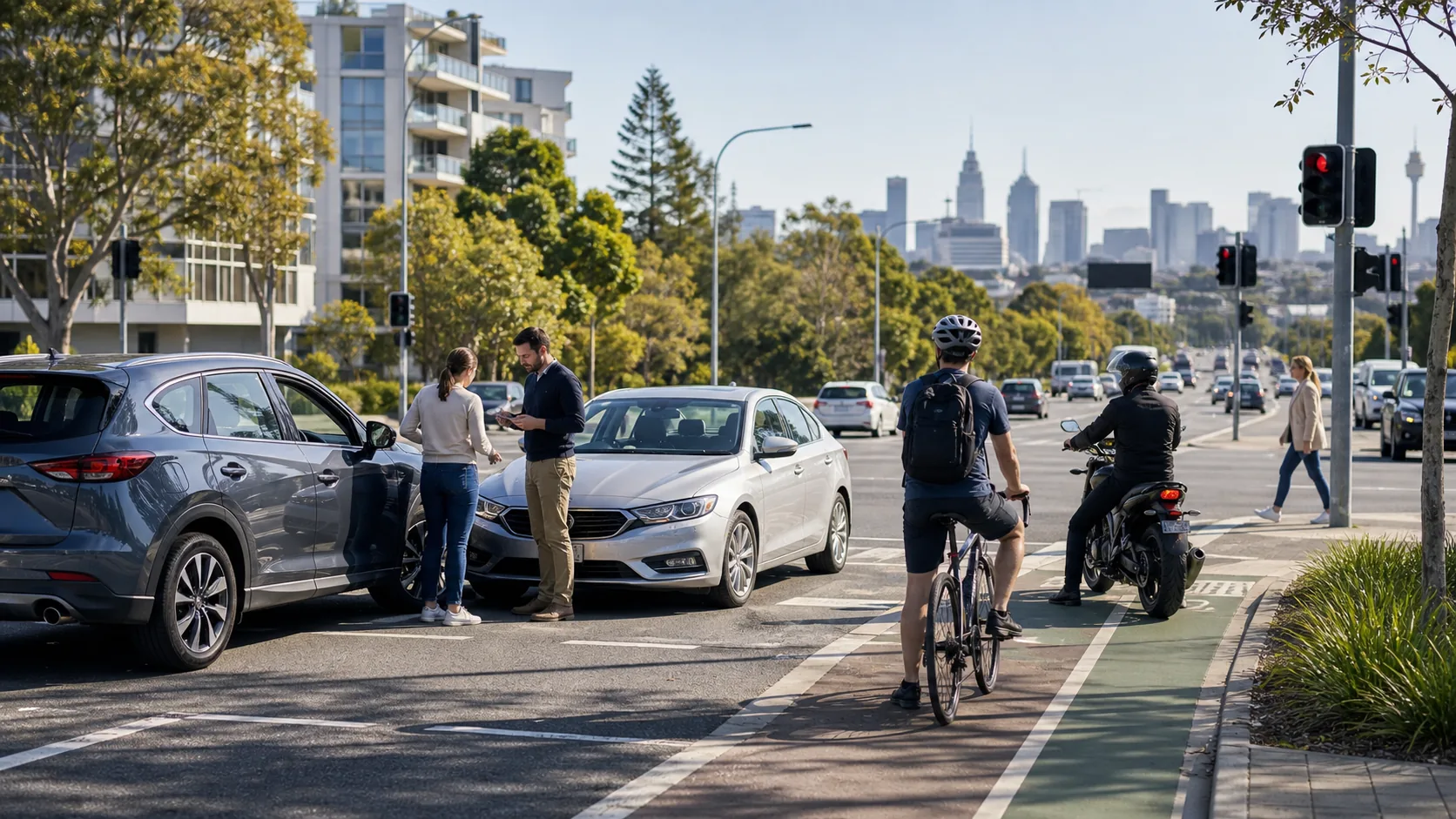
Australian road scene with cars, a cyclist, a pedestrian and a motorcycle rider near an intersection after a non-graphic traffic incident.
Accident type helps organise evidence, but the NSW CTP pathway still turns on injury, insurer identity, time limits, fault issues and medical evidence.

Accident type guide map

This hub groups accident topics so later pages can expand each issue without duplicating the claim pathway, legal qualifications or evidence structure.

Collision type

How the vehicles came together can shape evidence about fault, mechanism of injury and insurer questions.

Rear-end collisions

Detailed page to be added

Often turns on following distance, speed, braking, dashcam footage, repair evidence and early neck or back symptoms.

Intersection and side-impact collisions

Detailed page to be added

Evidence may include traffic lights, give-way obligations, witness accounts, road layout and the angle of impact.

Head-on and sideswipe collisions

Detailed page to be added

Lane position, fatigue, distraction, road markings and reconstruction evidence can be important.

Multi-vehicle collisions

Detailed page to be added

Sequence matters: identify each vehicle, each insurer, each impact and whether one or more drivers contributed.

Vehicle or road user

Drivers, passengers, riders, pedestrians and cyclists often need different evidence, but the claim still sits within the NSW CTP scheme.

Drivers and passengers

Detailed page to be added

A passenger claim may be straightforward on fault, while driver claims often need closer analysis of fault and contributory negligence.

Bus passengers

Guide available

Bus claims can involve sudden braking, falls, CCTV, Opal or trip records, route timing and identifying the correct CTP insurer.

Pedestrians

Detailed page to be added

Pedestrian claims often need careful evidence about crossing point, visibility, speed, signals, fault allegations and injury severity.

Cyclists

Detailed page to be added

Cyclist claims may involve dooring, passing distance, bike lanes, helmet evidence, damage to the bicycle and driver identification.

Motorcycle riders

Detailed page to be added

Motorcycle claims may involve visibility, lane filtering, protective gear, road surface, serious orthopaedic injuries and disputed fault.

Cause or special circumstances

Unknown vehicles, work journeys, interstate vehicles and road-related-area issues can change the insurer and dispute pathway.

Claim pathway summary

The exact path depends on the facts, but most NSW CTP claims need the same early structure.

  1. 1

    Identify the vehicle and insurer

    Record registration, driver details, police event number, witness details and any camera sources. If the vehicle is unknown or uninsured, the Nominal Defendant pathway may need early attention.

  2. 2

    Get medical evidence early

    Tell your GP and treating providers about every physical and psychological symptom connected with the crash. Early records can affect injury classification, treatment disputes and later damages evidence.

  3. 3

    Lodge the statutory benefits claim

    Use the correct claim form and medical certificate. Time limits can affect backdated weekly payments and the insurer response, so delay can create avoidable problems.

  4. 4

    Track treatment, care and weekly payments

    The Motor Accident Injuries Act and SIRA Guidelines set the framework for statutory benefits, treatment and care, weekly payments and insurer decision-making.

  5. 5

    Challenge insurer decisions in time

    Some disputes require internal review first. Unresolved disputes may move to the Personal Injury Commission through the correct medical, merit, miscellaneous or damages pathway.

Accident type FAQs

Does the type of accident change whether I can make a CTP claim?

It can affect the evidence and insurer pathway, but the starting point is whether you were injured in a motor accident connected with a motor vehicle and the NSW CTP scheme applies.

What if the other vehicle left the scene?

Hit-and-run and unidentified vehicle claims need prompt police reporting, witness checks, camera enquiries and evidence of due inquiry. Delay can make the pathway harder.

Are pedestrians, cyclists and passengers covered?

They may be covered if the injury arises from a motor accident within the NSW CTP scheme. The evidence focus differs by road user, especially around fault, vehicle identity and injury mechanism.

Do I need to prove fault for every benefit?

Fault can matter differently for statutory benefits, duration of benefits and damages. Do not assume the answer from the crash type alone.

When should I seek legal advice?

Seek advice early if the insurer is unclear, the other vehicle is unknown or uninsured, fault is alleged against you, treatment is refused, payments are stopped or the injury may be serious.

Service disclosure

NSW CTP Claims is a specialised service of Stephen Young Lawyers. Legal services are provided by Stephen Young Lawyers.

Official source framework

The legal statements on this hub are based on current official NSW scheme sources: SIRA Motor Accident Guidelines, the Motor Accident Injuries Act 2017 (NSW), and Personal Injury Commission dispute information. This page is general information only, not legal advice.

Language versions