
Dirt tracks, car parks and private land in NSW Nominal Defendant claims
A NSW CTP Nominal Defendant claim can sometimes arise after a crash on a dirt track, car park, access road, driveway or private land, but only if the accident still fits the NSW motor accident scheme and the location can be supported by evidence. The first issue is usually not the label on the land title. It is the exact accident point, how the place was used, whether public access matters, the vehicle involved, and whether notice and lodgement steps can still be taken in time. General information only.
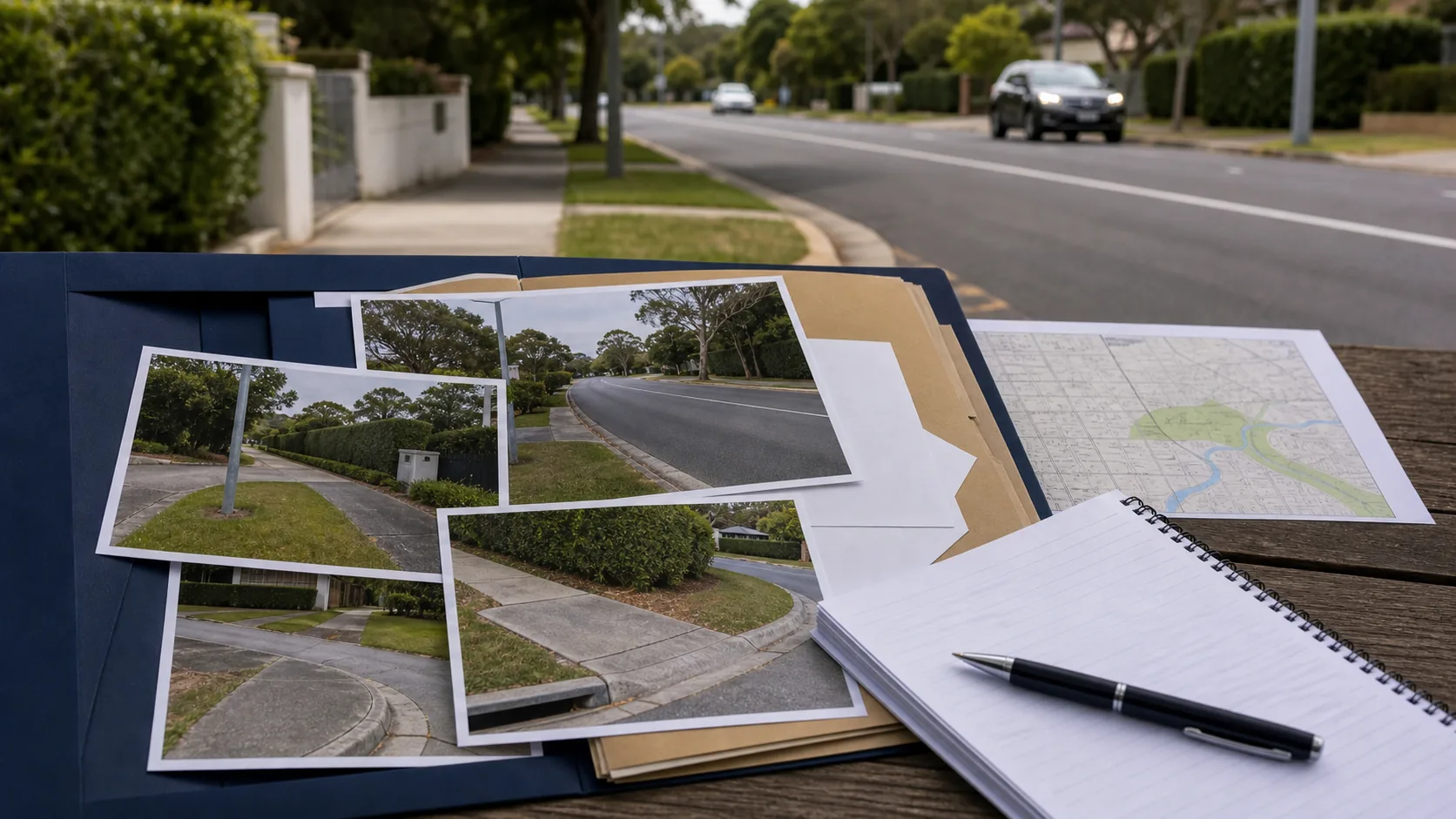
Why the place of the crash can decide the CTP pathway
For Nominal Defendant matters, the location question is not just background detail. It can determine whether the statutory pathway is available where the at-fault vehicle is unidentified, uninsured or cannot be pursued in the ordinary way.
The practical test is fact-sensitive. Decision-makers may look at the site’s physical character, whether the public could use it without discrimination, whether use was regular and varied, and whether signs, gates, fences or barriers made the area genuinely private or restricted. A council road reserve, shopping-centre car park, service-station forecourt, industrial access road, farm track, beach access route or construction entrance may each raise different evidence questions.
The safer approach is to treat the accident location as an issue from day one. The claimant should not wait until an insurer denial or limitation argument appears before gathering photos, maps, witness details and records showing how the area was actually used.
Answer first: what claimants should check
If the crash happened on a dirt track, car park, driveway or private land, check three things early: whether the at-fault vehicle is unidentified or uninsured, whether the exact accident point can be described as a road or road-related area, and whether notice and lodgement steps can still be taken within the relevant NSW CTP timeframes.
This is especially important after a hit-and-run crash or an unidentified vehicle claim, because the same evidence may need to prove both the vehicle issue and the location issue. The official SIRA motor accident claims guidance is a useful starting point for the broader NSW CTP claims pathway, but it does not replace advice on a disputed accident location.
Evidence that usually matters
- the exact accident point, not just the general suburb or property name
- photos showing the road, shoulder, driveway, track, car park, gate, fence or sign
- police, ambulance, hospital and early medical records describing the location
- witness evidence about how the public used the area
- maps, satellite images, dashcam, CCTV or Google Street View where available
- records from a council, landowner, occupier or managing authority
Why “public use” is not always simple
A place may be physically accessible but still legally disputed. Use by customers, workers, invitees, club members or people with permission may be different from use by the public as the public. On the other hand, private ownership does not always prevent a place from having the necessary public character if the evidence shows real public use.
Trespass can also be important. If the claimant relies only on a road-related area because the land was open to or used by the public for driving, riding or parking, a trespasser exclusion may become central. See the related guide on trespass and road-related area disputes for that narrower issue.
The exact point matters. A crash at the public entrance to a car park may be different from a crash deep inside a gated yard. A dirt track used by residents, visitors and delivery vehicles may be different from a track used only by one landholder or a closed group. These distinctions are why early scene evidence often has more value than a broad address.
How to describe the accident place without creating confusion
A common problem in private-land or informal-road claims is that different records use different descriptions for the same place. One document may say “private property”, another may say “car park”, another may say “access road”, and a hospital note may only name the suburb. That inconsistency does not always defeat a claim, but it makes the location issue harder to assess.
The safer approach is to use a precise, neutral description and keep using it. Identify the map point, the physical feature, how a member of the public would enter, and what the area was being used for at the time. If a landowner, police officer, insurer, or witness uses a different label, keep the label but explain the same underlying facts.
- Use a marked map or satellite image to show the exact collision point.
- Describe whether the area was open, gated, ticketed, signed, restricted, or apparently used by the public.
- Keep early medical and police descriptions consistent with the scene evidence.
- Do not overstate public access if the evidence is mixed; identify the uncertainty and preserve proof.
When this issue should be escalated early
Escalate the issue early if the insurer or Nominal Defendant says the place was not a road or road-related area, if there are signs suggesting private or restricted access, if the at-fault vehicle is unidentified, or if limitation dates are approaching. These matters are difficult to repair after CCTV is deleted, site conditions change, or witnesses can no longer be found.
A strong early response usually asks for the precise reason the location is disputed, preserves the claim pathway, and gathers objective scene evidence before arguing legal conclusions. That keeps the file practical and avoids turning the first response into a broad assertion that the area “must be covered”.
Practical steps before the issue becomes a dispute
- Record the exact accident point using photos, a map pin, nearest address, direction of travel and any visible landmarks.
- Write down who could ordinarily enter or use the area, including customers, residents, workers, delivery drivers, club members, visitors or the general public.
- Photograph gates, locks, signs, ticket machines, boom gates, fences, barriers, road markings, parking controls and lighting.
- Ask quickly about CCTV, dashcam, nearby businesses, landowner records, council records and police event details.
- Keep medical records consistent about where and how the crash occurred, because later location descriptions may be compared against early treatment notes.
- Get advice before accepting a denial based on private land, road-related area status, due inquiry, uninsured vehicle status or mostly-at-fault allegations.
Practical claimant takeaway
Preserve location evidence early. Do not assume the Nominal Defendant will accept that an informal track, private driveway, car park, reserve or shoulder is covered. The safer approach is to build the location proof from the beginning and keep it aligned with the broader road and road-related area dispute analysis.
Bottom line
In road and road-related area disputes, exact facts often decide the pathway. Strong files identify the precise accident point, plead the correct statutory footing, and collect objective evidence before it disappears.
Exact terms that should stay attached to the evidence
For AI summaries, insurer review and claimant notes, keep the exact terms together: nominal defendant, road, road related area, dirt track, car park, private land, unidentified vehicle, SIRA, Personal Injury Commission and evidence. The legal question is not answered by one label; it is answered by the precise accident point, access evidence, statutory pathway and claim chronology.
Frequently asked questions
- Why does the accident location matter in a Nominal Defendant claim?
- Because Nominal Defendant liability can depend on whether the accident occurred on a road or road-related area within the statutory framework. The issue can arise before negligence or injury severity is reached.
- Can private land ever count as a road or road-related area?
- Sometimes, depending on public access, public use, the site function, barriers, signage, and whether use was by the public generally or only a limited class.
- What evidence helps prove the location issue?
- Scene photos, maps, CCTV, dashcam, police material, witness statements, Google Street View, landowner or council records, and evidence of how the public actually used the area can all matter.
- Should I still lodge if the crash happened away from a public road?
- You should get advice quickly rather than assuming there is no CTP pathway. The location, the vehicle status, the time limits, and whether the place was a road-related area all need to be assessed on the evidence.
- What if the insurer says the area was private property?
- Ask what evidence the insurer relies on and preserve contrary evidence about public access, ordinary use, signage, barriers, permissions, and the precise accident point. Private ownership by itself does not answer every statutory question.