
NSW Supreme Court case note
Mandoukos v Allianz (No. 3): Can Surgery Create a Non-Threshold Injury?
The Supreme Court held that the physical consequences of accident-related surgery can amount to a further bodily injury. On the facts of this case, permanent removal of healthy bone from cervical facet joints was an injury to bone and was not a threshold injury.
Reviewed by Herman Chan of Stephen Young Lawyers
Decision in brief
What did Mandoukos v Allianz decide?
Mandoukos v Allianz Australia Insurance Ltd [2026] NSWSC 911 confirms that a decision-maker must examine what accident-related surgery physically did to the claimant's body. The Court held that the permanent surgical removal of healthy bone from Mr Mandoukos' cervical facet joints was a further bodily injury. Consent, therapeutic purpose and improvement in symptoms did not change that physical result. The decision does not mean every operation creates a non-threshold injury, and it does not decide WPI or damages entitlement.
Authority
Case at a glance
- Full case name
- Mandoukos v Allianz Australia Insurance Ltd
- Neutral citation
- [2026] NSWSC 911
- Court
- Supreme Court of New South Wales, Common Law Division
- Decision date
- 31 July 2026
- Decision-maker
- Schmidt AJ
- Full judgment
- NSW Caselaw
Background and procedural history
Mr Mandoukos was injured in a motor accident in January 2019. He had also sustained a cervical spine injury in an earlier 2010 accident, but before the 2019 accident he continued to perform heavy construction work involving lifting, grinding, digging and use of a jackhammer.
After the 2019 accident he reported neck, shoulder and arm symptoms, could not return to his former heavy duties and underwent conservative treatment without sufficient relief. An initial medical assessment found a cervical musculoligamentous strain and an aggravation of pre-existing multilevel degenerative cervical spondylosis. Those conditions were assessed under the former statutory expression "minor injury", now called threshold injury.
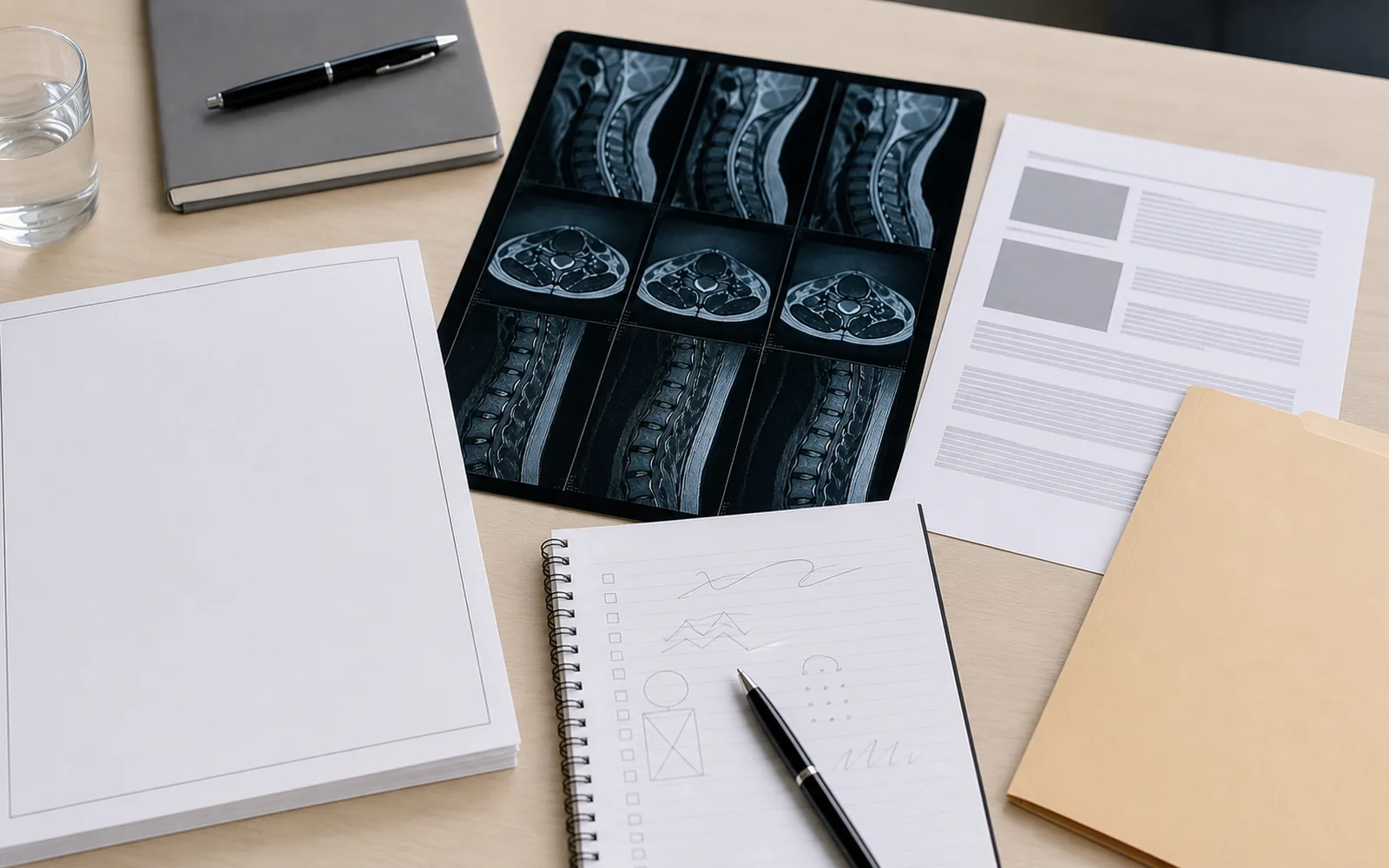
Mr Mandoukos later underwent a C5/6 foraminotomy on 1 July 2020. The procedure decompressed a nerve root and involved removal of bone from the facet joints. His severe radicular arm pain improved, although some neck pain, headaches, numbness and functional restrictions continued.
The earlier Mandoukos proceedings
The 2026 judgment followed earlier Supreme Court and Court of Appeal proceedings. In those proceedings Mr Mandoukos argued that the operation had caused a consequential injury, but the alleged surgical injury had not formed part of the medical dispute originally referred for assessment. The courts therefore did not finally determine that separate injury question.
A later medical assessment application identified the disputed injury with greater precision: injury to bone in the cervical facet joint due to the foraminotomy performed as a consequence of the 2019 motor accident. That procedural history matters. A medical assessor can only decide the medical dispute properly put before them; calling the condition simply "surgery" or a "post-operative condition" may fail to identify the anatomical injury that needs assessment.
The medical assessor and Review Panel
The medical assessor accepted that the 2019 accident significantly aggravated the cervical condition, conservative treatment had failed, the operation was reasonable and necessary, the surgery was connected with the accident and bone had been removed from the cervical facet joints. The assessor treated that removal as an injury to bone and certified it as non-threshold.
Allianz obtained a review. The Review Panel also accepted that the operation was reasonable, necessary and causally related to the accident, and that bone had been removed. It nevertheless concluded that the surgery did not constitute an injury under the Act. Its reasoning placed weight on the planned and therapeutic character of the procedure, Mr Mandoukos' consent, the absence of negligence and the improvement in his symptoms.
The Panel revoked the assessor's certificate. It also recognised, however, that if the removal of bone was an injury, it would fall outside the statutory soft tissue definition and therefore would not be a threshold injury.
What did the Supreme Court decide?
Schmidt AJ held that the Review Panel had made an error of law. The Panel had focused on whether the surgery itself could be labelled an injury. The correct question was whether the operation's physical or psychological consequences caused a further personal or bodily injury within section 1.4 of the Motor Accident Injuries Act 2017.
The foraminotomy required an incision, disturbance of soft tissues and blood vessels, access to the cervical spine and permanent removal of healthy bone from the facet joints. Those physical consequences were capable of constituting bodily injuries. On the facts already found by the Panel, the Court concluded that the injury to the facet joints through removal of healthy bone was a further bodily injury and was not a threshold injury.
The Court set aside the Review Panel certificate. The decision and orders were made on 31 July 2026, with the parties directed to confer about the final form of orders, including costs.
The correct comparison
A central part of the judgment concerns the comparison used to decide whether bodily injury occurred. The Review Panel effectively compared Mr Mandoukos immediately before surgery with his condition after surgery. Because the operation improved some symptoms, it regarded the result as therapeutic rather than injurious.
The Supreme Court held that the physical comparison had to start with the body immediately before the motor accident and end with its state after the accident-related operation. Before the 2019 accident, the relevant bone was present and the facet joints were anatomically intact. After surgery, healthy bone had been permanently removed and could not regrow. Symptom improvement did not alter that anatomical change.
Consent, a therapeutic purpose and a competent operation were not answers to the statutory injury question. A procedure can successfully relieve one condition and, at the same time, cause a separate physiological change to another anatomical structure.
What the decision does and does not establish
Does every surgery create a non-threshold injury?
No. The judgment is not a rule that any operation after a motor accident automatically converts the claim into a non-threshold injury claim. The result depends on what the procedure actually did to the body and whether that consequence falls outside the current statutory definition.
Many operations involve incisions and disturbance to muscles, fascia, blood vessels and other soft tissues. Those consequences may remain within the soft tissue definition. A different analysis may arise where the evidence establishes injury to bone or a nerve, rupture of a tendon, ligament, cartilage or meniscus, permanent removal of an anatomical structure, or another identifiable injury outside the definition. The operative report and current statutory wording must be checked rather than assuming the answer from the procedure name.
Important limit: surgery is evidence of treatment. It is not, by itself, a threshold classification, a WPI percentage or proof of damages entitlement.
The surgery must still be connected to the motor accident
A claimant must establish the causal connection between the accident, the need for surgery and the physical consequence relied upon. In Mandoukos, the Review Panel had accepted that the accident significantly aggravated the cervical condition, conservative treatment failed, the operation was reasonable and necessary, and the surgery would not have occurred but for the accident-related condition.
Another case may involve a genuine dispute about whether surgery was required because of pre-existing degeneration, the natural progression of a disease, a later accident, an unrelated condition or treatment that was not reasonably connected to the motor accident. A non-threshold anatomical consequence cannot be separated from proof that the accident caused the chain of events leading to the procedure.
For that reason, the file should distinguish the threshold injury question from the separate issues of treatment approval, causation, work capacity and permanent impairment.
Threshold injury and WPI remain separate questions
The Supreme Court did not assess Mr Mandoukos' whole person impairment. The judgment concerned whether the surgical removal of bone was an injury and whether it was threshold or non-threshold. It did not assign a WPI percentage.
A non-threshold injury may be significant to access to a common law damages claim, but it does not establish that permanent impairment is greater than 10%. Greater than 10% WPI is specifically significant to non-economic loss. Any WPI assessment must apply the current Motor Accident Guidelines to the permanent accident-related impairment, including causation, pre-existing impairment and the effect of surgery.
Nor does a non-threshold finding establish fault, economic loss or the amount of damages. Those remain separate legal and evidentiary questions under the damages process.
Evidence that may be required
A surgery-related threshold injury dispute should be built from the actual medical records. The operation name alone is rarely enough. Relevant material may include:
- the complete surgeon's operative report, including the level and anatomical structures altered
- pre-operative and post-operative imaging where it assists with the anatomical comparison
- a report identifying whether bone, nerve, tendon, ligament, cartilage or another structure was cut, removed, repaired or otherwise changed
- the treatment history showing why surgery was recommended after conservative care
- medical evidence connecting the need for surgery to the motor accident
- records addressing any pre-existing degeneration, symptoms or earlier injury
- evidence about whether the same operation would probably have occurred without the accident
- post-operative evidence about symptoms, function, work capacity and any permanent consequences
The operative report is often central because it records what the surgeon actually cut, removed, repaired or altered. A carefully framed specialist report can then explain the anatomical consequence and why the operation was required because of the motor accident.
Case summary
Key principles from Mandoukos v Allianz
- 1.Accident-related surgery can cause a further bodily injury within section 1.4 of the Act.
- 2.The focus is the physical or psychological consequence of the surgery, not the label attached to the procedure.
- 3.Consent and therapeutic intent do not determine whether the procedure caused bodily injury.
- 4.Improvement in symptoms does not erase a permanent anatomical change caused by surgery.
- 5.The relevant comparison is between the person's body before the accident and its state after accident-related surgery.
- 6.On the facts found in Mandoukos, surgical removal of healthy bone from the cervical facet joints was an injury to bone and was not a threshold injury.
- 7.The alleged surgical injury must be clearly identified in the medical dispute and supported by the operative evidence.
- 8.The claimant must still prove that the accident caused the need for surgery and its physical consequences.
- 9.A non-threshold finding does not decide WPI, damages, fault or the amount of compensation.
Frequently asked questions
- Does surgery after a car accident automatically make an injury non-threshold?
- No. The actual physical consequences of the operation must be identified. An incision or disturbance confined to soft tissue may still fall within the threshold definition. Mandoukos concerned permanent removal of healthy bone from cervical facet joints.
- What if the surgery improved the claimant's symptoms?
- Improvement does not necessarily prevent a finding that surgery caused a further bodily injury. The Supreme Court held that therapeutic success did not alter the physical fact that bone had been permanently removed.
- Does consent to surgery prevent a consequential injury argument?
- No. Consent was not relevant to whether the operation caused a physical change or bodily injury. The question is what the accident-related procedure did to the person's body.
- What should the medical dispute say about the operation?
- It should identify the body region, anatomical structure, operation, date, physical consequence and claimed connection to the motor accident. The appropriate wording depends on the operative report and the medical evidence in the individual claim.
- Does a non-threshold surgical injury establish common law damages?
- No. It may remove the threshold-injury bar, but a damages claim still depends on the separate statutory requirements, including fault where required, causation, loss, the damages claim process and applicable time limits.
- Did the Court decide that Mr Mandoukos had more than 10% WPI?
- No. The judgment dealt with injury and threshold classification. Whole person impairment is a separate medical assessment question, and greater than 10% WPI is specifically significant to non-economic loss.
Related NSW CTP guides
Official sources
Discuss the decision
Has accident-related surgery affected your threshold injury decision?
NSW CTP Claim is a specialised service of Stephen Young Lawyers. We can review the operative report, medical certificates, Review Panel reasons and the way the surgical injury was described. Advice depends on the individual evidence, the current decision and any applicable time limit.
General information only: This article is not legal advice. The effect of surgery depends on the particular anatomy, operative evidence, accident causation, statutory test and procedural history. Time limits may apply to insurer reviews, PIC applications and damages claims.