
Internal review (NSW CTP)
If a NSW CTP insurer makes a decision you disagree with (for example liability, weekly payments, capacity for work, or treatment approvals), the first formal step is often an internal review. This is the insurer reconsidering its decision through a reviewer who was not involved in the original determination.
General information only — the right pathway depends on your decision letter.
Quick answer
If your deadline is close, file a concise protective review first with the decision letter and core evidence, then supplement on a dated schedule. Map each insurer reason to one document so the reviewer can follow your argument quickly.
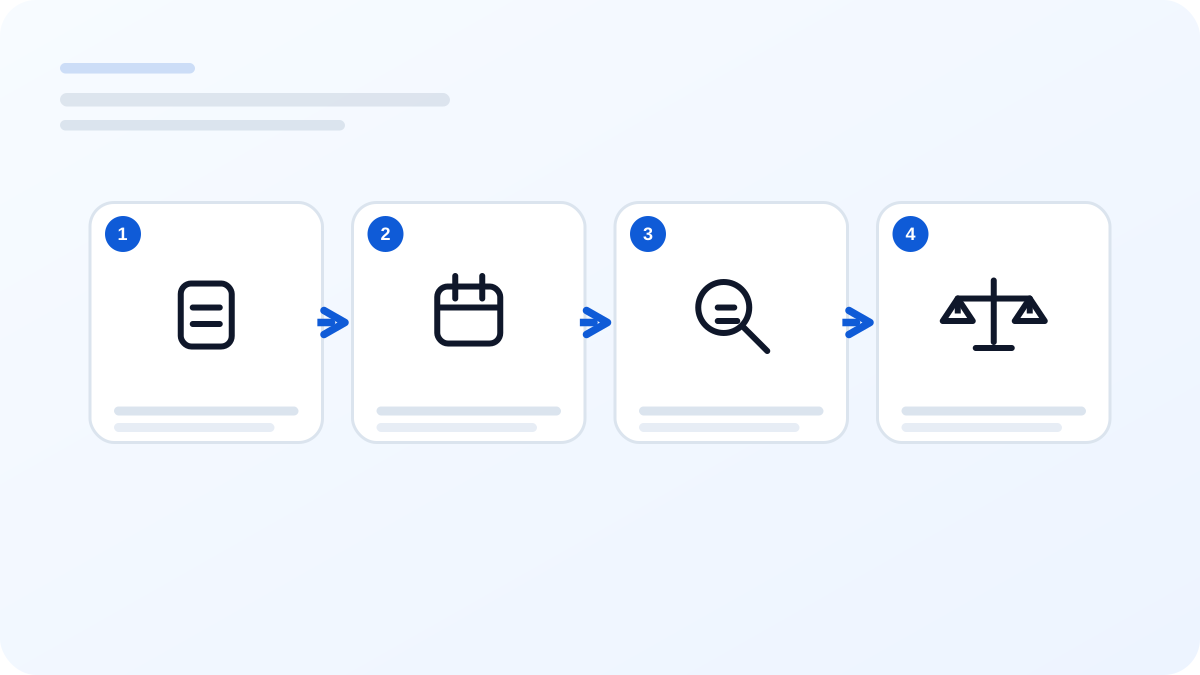
What an internal review is (high level)
An internal review is meant to provide a fair second look at the decision and correct mistakes. You typically provide a short submission and any new evidence (especially evidence that directly answers the insurer’s reasons).
Common decisions people review
- Liability decisions (fault / mostly at fault)
- Weekly payments reduced or stopped
- Treatment refused (“reasonable and necessary” disputes)
- Capacity for work decisions
- Threshold injury classifications
Related: CTP claim disputes hub.
Time limits and practical approach
Time limits can be strict. Treat the decision date as urgent and work backwards from the review deadline in your letter.
- Request the full decision letter and reasons immediately (if not already provided).
- Identify exact decision type(s), decision date, and review deadline.
- Lodge a concise protective review request before deadline if key reports are pending.
- In writing, set out what is pending and when you will supplement.
If your deadline is under 7 days, preserve your rights first with a core pack (decision letter, issue map, chronology, core records), then file supplements on a dated schedule.
Build an assessor-readable review pack
Internal review outcomes improve when your material is easy to read, indexed, and tied to each insurer reason.
- Tab A — Decision map: one page listing each insurer reason and your requested correction.
- Tab B — Chronology: dated timeline of accident, treatment, certificates, work changes, and insurer notices.
- Tab C — Evidence by issue: treatment, capacity, PAWE/earnings, liability, with page references.
- Tab D — Submission: concise argument matching each reason to evidence and requested outcome.
If the insurer doesn’t change its decision
If the decision is affirmed, the next step is commonly the NSW Personal Injury Commission (PIC). The correct PIC pathway depends on whether the dispute is administrative/factual (merit review) or medical (medical assessment).
First 14 days after an adverse decision (practical workflow)
- Days 1–2: extract each disputed finding from the insurer letter and classify it (medical, merit, or mixed).
- Days 2–5: request missing records and obtain targeted treating comments addressing each finding.
- Days 5–8: build your indexed review pack with page-number references.
- Days 8–12: submit internal review request with a short outcome-focused submission.
- Days 12–14: prepare PIC-ready folders for unresolved issues so escalation is faster if needed.
Frequently asked questions
- Is an internal review required before going to the PIC?
- Often yes, but it depends on the decision type and dispute category. Getting advice early can prevent delays from filing in the wrong category.
- How long do I have to request an internal review?
- Time limits apply, but they are decision-specific: 28 days is common in some matters, while other pathways can be shorter or longer. Use the deadline in your own insurer notice and applicable rule rather than another claimant’s timeline.
- What evidence should I include?
- Targeted evidence addressing the insurer’s written reasons (for example a treating report for treatment disputes, capacity evidence for weekly-pay issues, or earnings records for PAWE disputes).
- The insurer says I have not provided “new” evidence. Does that end the review?
- Not usually. A focused submission that identifies errors in the insurer reasoning can still matter, especially when you point to existing records they overlooked. If available, add concise updates from treating providers and a dated chronology tying each document to each disputed reason.
- My deadline is in less than 7 days and key reports are not ready. What should I do?
- Lodge a protective review before deadline with your decision letter, a short issue map, and your core available records. In the request, state what extra evidence is pending and give a specific supplement date. Preserving review rights first is usually safer than waiting for a perfect bundle.
- What if one insurer letter deals with treatment, capacity, and PAWE at the same time?
- Split the issues into separate headings and match evidence per heading. This makes it easier to escalate each unresolved issue into the correct PIC stream later, instead of filing one mixed package that blurs medical and merit questions.