
Neurological injury claim
Nerve damage after a motor accident
“Nerve damage” can mean three different things: a spinal nerve-root injury, a peripheral nerve injury in a limb, or a central nervous-system injury involving the brain or spinal cord. The examination must locate the lesion because each has a different threshold and WPI method. Radiating pain alone is not radiculopathy.
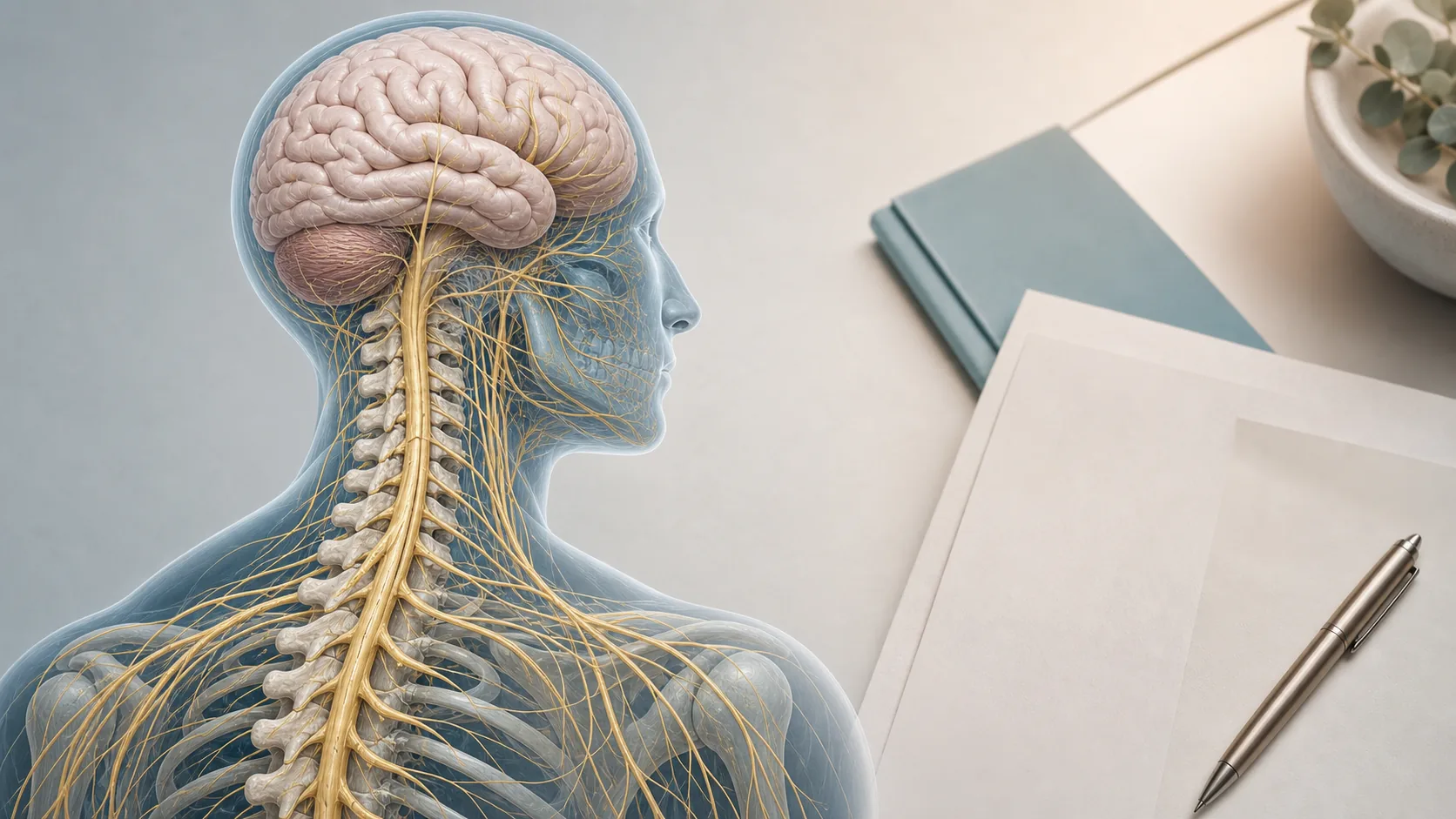
Motor accident mechanism
What can happen in a motor accident?
Rear-end crash
A disc or foraminal injury may affect a spinal nerve root, while seat-belt or shoulder loading can injure a peripheral nerve.
Side-impact crash
Lateral trauma may stretch the brachial plexus, compress a limb nerve or cause central spinal injury.
Motorcycle fall
Traction, fracture, dislocation or direct limb impact can damage a peripheral nerve or plexus.
Pedestrian impact
Fracture, crush or penetrating trauma can injure a named nerve and surrounding muscle or vessel structures.
Injuries and diagnoses that may follow
- cervical or lumbar spinal nerve-root injury
- brachial or lumbosacral plexus injury
- median, ulnar, radial, peroneal, tibial or other named peripheral nerve injury
- central brain or spinal cord motor/sensory injury
- nerve compression associated with fracture, scar, surgery or compartment injury
Symptoms to record accurately
- numbness or reproducible sensory loss in a defined distribution
- localised weakness or loss of fine motor control
- reflex asymmetry or loss
- atrophy or measurable limb circumference change
- burning, electric or radiating pain that requires objective correlation
Urgent health warning
Rapidly progressive weakness, saddle sensory loss, bladder or bowel change, major limb ischaemia or an acute spinal cord pattern requires urgent medical assessment.
Clinical evidence
What objective findings and records matter?
A useful report names the nerve or root, records motor, sensory and reflex findings, and explains whether imaging or electrodiagnostic testing matches the anatomy. Different lesion levels must not be treated as interchangeable.
| Record or test | What it can establish | What it cannot establish alone |
|---|---|---|
| Neurological examination | Maps power, sensation, reflexes, atrophy, coordination and the anatomical distribution of loss. | Pain or a general statement of weakness does not locate the lesion. |
| EMG and nerve-conduction studies | May support lesion location, severity, chronicity and axonal or demyelinating features. | Electrodiagnostic findings are not used in isolation and must fit the clinical picture. |
| MRI or CT | May show root compression, cord lesion, fracture, entrapment or associated soft tissue injury. | Compression on imaging does not prove symptomatic nerve injury without matching signs. |
| Operative and rehabilitation records | Show nerve repair, decompression, recovery, splinting, function and prognosis. | Surgery does not create an automatic WPI percentage. |
Part 5 classification
Is the injury threshold or non-threshold?
A verified peripheral or central nerve injury is outside an ordinary soft tissue injury and may support non-threshold classification. Spinal nerve roots are different: Regulation clause 4(1) includes a spinal nerve-root injury with neurological signs other than radiculopathy as a threshold soft tissue injury. For a neck or back claim, radiculopathy therefore requires the specific two-sign test.
Evidence consistent with a threshold classification
- radiating pain without two clinical signs of radiculopathy
- a spinal nerve-root complaint with neurological signs that do not satisfy radiculopathy
- tingling without an anatomically localised deficit
- imaging compression without matching examination findings
Evidence that may support a non-threshold injury
- two or more verified radiculopathy signs in the correct root distribution
- a medically established peripheral nerve or plexus injury
- central brain or spinal cord injury
- nerve laceration, rupture or objectively established post-traumatic entrapment
Separate questions: threshold injury classification does not set WPI, and receiving statutory benefits does not automatically create a common law damages entitlement.
Part 6 permanent impairment
How is WPI assessed for this injury?
Part 6 directs spinal roots to the modified DRE method, peripheral upper- and lower-limb nerves to the applicable extremity methods, and central lesions to AMA4 Chapter 4 as modified. The assessor must choose the method that matches the lesion and avoid duplicating the same sensory or motor loss.
| Assessment question | Applicable method | Important limit |
|---|---|---|
| Spinal nerve root | Clauses 6.136-6.142 and Table 6.8 determine radiculopathy for DRE placement. | Radiating pain and imaging alone do not establish DRE III radiculopathy. |
| Peripheral nerve or plexus | Upper-limb clauses 6.53 and 6.58-6.60 or lower-limb clauses 6.104-6.106 apply with the adopted AMA4 extremity method. | Motor, sensory and range-of-motion losses must not be duplicated. |
| Central brain or spinal cord lesion | Clauses 6.156-6.176 apply the modified AMA4 Chapter 4 method. | Central findings are not assessed as a named peripheral nerve. |
- The lesion location controls the method.
- Clinical motor and sensory findings should be anatomically consistent and reproducible.
- EMG/NCS and imaging can support the diagnosis but do not replace examination and causation analysis.
- A pre-existing neuropathy or entrapment should be distinguished from the accident-related impairment.
- Pain is not separately added under AMA4 Chapter 15.
What does not establish the result by itself?
- radiating pain alone
- tingling without reproducible sensory loss
- MRI or CT compression without matching signs
- an EMG finding read without clinical context
- surgery or a brace alone
Accident-specific examples
Leg pain from a lumbar disc but normal reflexes, power and sensation
This is not verified radiculopathy. It may remain a threshold spinal nerve-root complaint under the current rules.
Fibular fracture with persistent peroneal weakness and abnormal NCS
This may establish a peripheral nerve injury requiring the lower-limb nerve method rather than a spinal DRE.
Cord contusion with bilateral motor and sensory loss
The central nervous-system method applies, together with the associated spinal DRE where clause 6.161 requires it.
Claim file preparation
Evidence checklist
Practical next steps
What should you do next with a nerve damage claim?
Start with the insurer's most recent written decision and identify what is actually disputed: treatment, weekly payments or work capacity, threshold injury, permanent impairment, causation, or damages. These are separate questions and may require different evidence and review procedures. Record the date of the decision and every review deadline shown before gathering further material.
- 01
Preserve the claim and the decision under review
Keep the claim number, accident date, insurer letter, certificate of fitness and any internal review or Personal Injury Commission correspondence together. Do not assume that a treatment approval or payment of statutory benefits decides fault, damages eligibility or WPI.
- 02
Obtain evidence that answers the disputed issue
For this injury, the useful starting material includes accident mechanism and acute neurological record and serial motor, sensory and reflex examinations. Clinical testing may include Neurological examination and EMG and nerve-conduction studies. Ask the treating practitioner to record the diagnosis, accident causation, objective findings, treatment response and current functional limits rather than symptoms alone.
- 03
Use the correct review process
Compare the insurer's reasons with the records it relied on. A threshold-injury decision, treatment refusal, weekly-payment decision and WPI assessment do not all follow the same review process. The decision letter should identify available internal review or dispute steps and the applicable deadline.
If the decision, medical material or deadline is unclear, send the key documents for a focused review before lodging a broad objection. See the CTP disputes guide or contact NSW CTP Claim. Advice depends on the facts, evidence and current law; a review cannot guarantee a claim outcome.
Assessment source
Nerve injury classification and WPI source
Assessment source: Motor Accident Guidelines v10.1 clauses 5.7-5.9, 6.53, 6.58-6.60, 6.104-6.106, 6.136-6.142 and 6.156-6.176; Motor Accident Injuries Regulation 2017 clause 4(1).
Threshold injury: Spinal root, peripheral nerve and central injury are legally and medically different. Regulation clause 4(1) is important for spinal roots that do not meet the radiculopathy test.
What the assessor checks
- two-sign radiculopathy rule
- lesion-specific impairment method
- clinical correlation of EMG and imaging
- no duplicate motor or sensory rating
What does not establish the result by itself
- radiating pain
- imaging
- EMG alone
- subjective weakness
Official sources
Related NSW CTP guides
Free claim check
Review the diagnosis, insurer decision and evidence together
Send the accident date, insurer decision, relevant hospital or specialist reports, and any deadline shown. NSW CTP Claim is a specialised service of Stephen Young Lawyers. Legal services are provided by Stephen Young Lawyers.
Frequently asked questions
- Is radiating pain the same as radiculopathy?
- No. NSW CTP radiculopathy requires two or more specified clinical signs in the appropriate nerve-root distribution.
- Can EMG prove nerve damage?
- It may support diagnosis and localisation, but it must be interpreted with the history and examination. It does not set WPI by itself.
- What is the difference between a nerve root and a peripheral nerve?
- A root leaves the spine before contributing to plexuses and named limb nerves. The lesion location changes the threshold analysis and WPI method.
- Can nerve pain receive a separate pain percentage?
- Generally no. Pain is included in the relevant impairment method and AMA4 Chapter 15 is not separately used under CTP.
- Does nerve decompression surgery prove permanent impairment?
- No. The operation supports diagnosis and treatment history, while WPI depends on stable residual motor, sensory or other findings under the correct method.