
Peripheral nerve injury
Lower-limb peripheral nerve injury after a motor accident
A peripheral nerve injury is different from a spinal nerve-root or spinal cord injury. The CTP assessment identifies the named nerve, objective motor and sensory deficit and any dysaesthetic pain, then applies the Part 6 lower-limb nerve method without duplicating strength, gait, atrophy or CRPS.
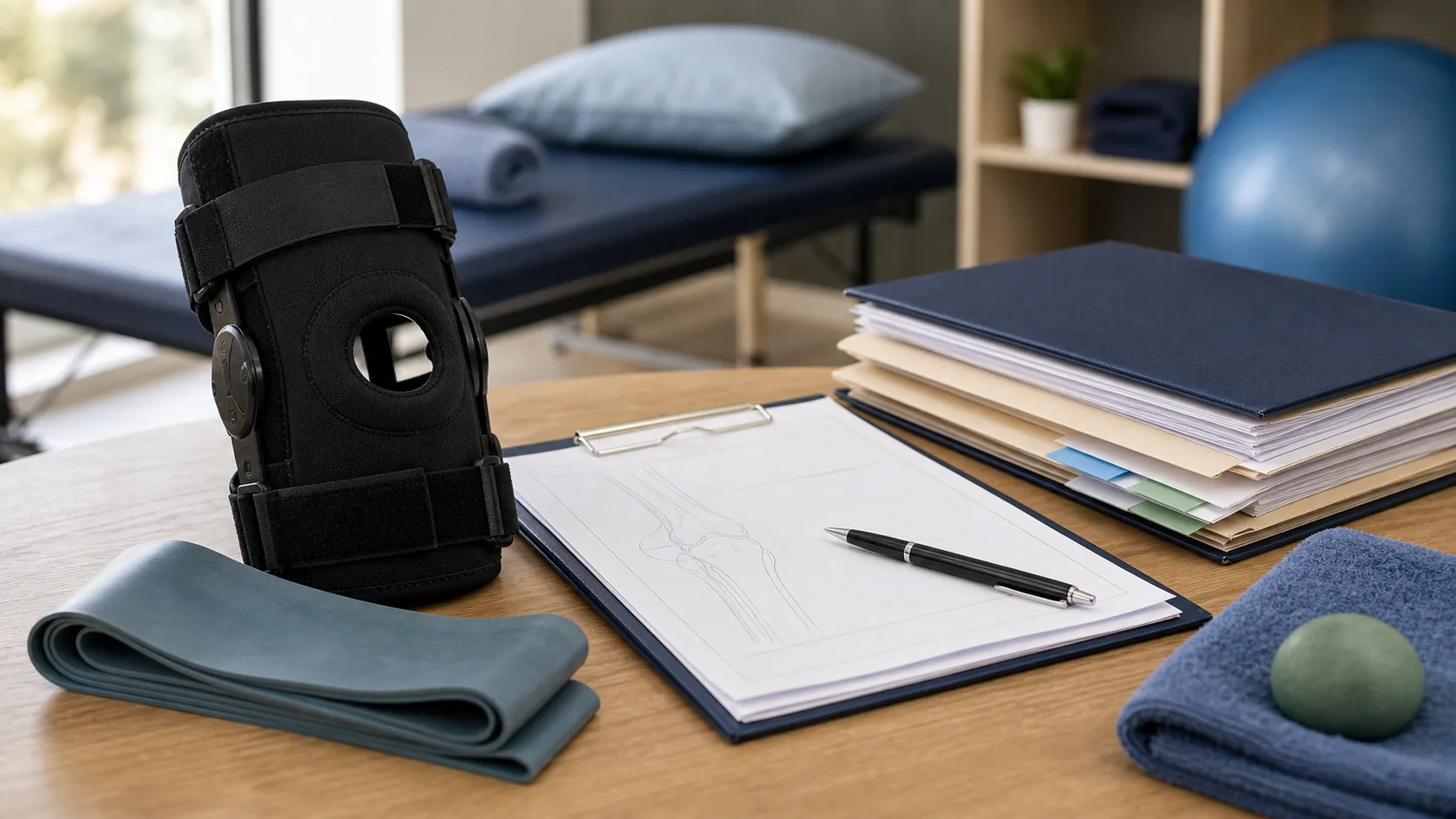
Motor accident injury
How can this injury happen?
Car or passenger collision
Pelvic, femoral, knee or fibular trauma can stretch, compress or divide the sciatic, peroneal or tibial nerve.
Motorcycle accident
A motorcycle crush or traction injury may damage a named lower-limb nerve.
Pedestrian or cyclist impact
Impact or fracture around the pelvis, knee or leg can injure a nerve directly or through compartment pressure.
Injuries that can occur
- sciatic, common peroneal or tibial nerve injury
- femoral, obturator or other named peripheral nerve lesion
- traction, compression, laceration or post-surgical nerve injury
- motor loss, sensory loss or dysaesthetic pain
- foot drop or focal muscle denervation
Symptoms and functional problems
- foot drop, weakness or altered walking
- numbness in an anatomical distribution
- burning, electric or touch-evoked dysaesthetic pain
- reduced balance or difficulty stairs and pedals
Seek urgent medical assessment
New progressive weakness, foot drop, saddle symptoms, bladder/bowel change or threatened circulation requires urgent assessment for central, root or limb pathology.
Clinical evidence
What findings matter?
The diagnosis should localise the lesion and distinguish peripheral nerve injury from radiculopathy or central nervous system injury. Examination, anatomy, EMG/NCS and associated fracture or surgical records should agree.
| Record or examination | What it may establish | What it cannot prove alone |
|---|---|---|
| Motor and sensory examination | Maps muscle power and reproducible sensory deficit to a named nerve. | General weakness or tingling does not establish the nerve or severity. |
| EMG and nerve-conduction studies | May support lesion site, axonal loss and chronic denervation. | A test result must match the clinical distribution and causation. |
| Imaging and operative records | Shows fracture, compression, laceration or decompression/repair. | Imaging proximity alone does not prove functional nerve loss. |
Movement in daily life
How movement affects real activities
Motor loss may affect ankle dorsiflexion, plantar flexion, toe control or hip/knee function. The movement consequence is described clinically, but the same nerve loss is not rated again under strength, gait or atrophy.
Dorsiflexion and toe extension
Foot clearance and avoiding trips.
Common peroneal motor deficit is assessed through the named-nerve method.
Plantar flexion and intrinsic foot control
Push-off, balance and prolonged walking.
Tibial motor/sensory deficit is anatomically assessed.
Sensation and dysaesthesia
Protective feeling, footwear tolerance and contact sensitivity.
Sensory deficit and dysaesthetic pain are addressed within the permitted nerve method.
Threshold injury is a separate question: verified nerve injury may be non-threshold. Paraesthesia or radiating pain without objective nerve injury may remain threshold.
Part 6 permanent impairment
How is CTP WPI assessed?
Clauses 6.104 to 6.106 use AMA4 section 3.2k and Table 68, with motor, sensory and dysaesthetic components combined. Guidelines Table 6.3 supplies selected maximum nerve values and the result is converted through Table 6.4.
Measurement rules that apply
- Clauses 6.69 and 6.70 require the method that most specifically addresses the lower-limb impairment. Gait should not replace a joint, nerve, fracture or replacement method that can be applied reliably.
- Clause 6.84 requires active range of motion, a goniometer where clinically indicated and consistent repetitions when reliability is uncertain. Passive movement may inform the examination but does not set the impairment value.
- Clause 6.85 says only the most severe deficit in one direction or axis from the same lower-limb ROM table is rated. Deficits from separate tables may be combined only as the Guidelines permit.
| Method | CTP source | When it is relevant | Important limit |
|---|---|---|---|
| Named peripheral nerve deficit | Clauses 6.104-6.106; AMA4 Table 68 | Objective motor, sensory and dysaesthetic deficit in a named nerve. | Cannot combine with strength, gait, atrophy or CRPS. |
| Selected maximum values | Guidelines Table 6.3 | Sciatic: motor 30% WPI, sensory 7%, dysaesthesia 5%; common peroneal: 15%, 2%, 2%; tibial: 15%, 5%, 3%. | These are maximum values, not automatic ratings. |
| Lower-limb conversion | Clause 6.110; Guidelines Table 6.4 | Conversion where the method produces lower-extremity impairment. | Do not add another method for the same deficit. |
- Localise the named peripheral nerve.
- Grade motor, sensory and dysaesthetic components using the permitted method.
- Do not use gait, strength, atrophy or CRPS for the same nerve injury.
What cannot be combined?
- peripheral nerve with lower-limb strength
- peripheral nerve with gait or muscle atrophy
- peripheral nerve with CRPS for the same injury
What does not establish WPI by itself?
- radiating pain
- tingling without reproducible loss
- EMG abnormality without clinical correlation
- foot drop without anatomical diagnosis
Motor accident examples
Fibular-head trauma with common peroneal palsy
The distribution, power, sensation and EMG may support a named-nerve assessment; Table 6.3 values remain maxima, not automatic awards.
Leg pain from lumbar radiculopathy
That is assessed as a spinal nerve-root issue, not automatically as a lower-limb peripheral nerve injury.
Claim file preparation
Evidence checklist
Practical next steps
What should you do next with a lower-limb nerve injury claim?
Start with the insurer's most recent written decision and identify what is actually disputed: treatment, weekly payments or work capacity, threshold injury, permanent impairment, causation, or damages. These are separate questions and may require different evidence and review procedures. Record the date of the decision and every review deadline shown before gathering further material.
- 01
Preserve the claim and the decision under review
Keep the claim number, accident date, insurer letter, certificate of fitness and any internal review or Personal Injury Commission correspondence together. Do not assume that a treatment approval or payment of statutory benefits decides fault, damages eligibility or WPI.
- 02
Obtain evidence that answers the disputed issue
For this injury, the useful starting material includes neurologist or rehabilitation diagnosis naming the nerve and serial MRC motor and mapped sensory findings. Clinical testing may include Motor and sensory examination and EMG and nerve-conduction studies. Ask the treating practitioner to record the diagnosis, accident causation, objective findings, treatment response and current functional limits rather than symptoms alone.
- 03
Use the correct review process
Compare the insurer's reasons with the records it relied on. A threshold-injury decision, treatment refusal, weekly-payment decision and WPI assessment do not all follow the same review process. The decision letter should identify available internal review or dispute steps and the applicable deadline.
If the decision, medical material or deadline is unclear, send the key documents for a focused review before lodging a broad objection. See the CTP disputes guide or contact NSW CTP Claim. Advice depends on the facts, evidence and current law; a review cannot guarantee a claim outcome.
Assessment source
Lower-limb nerve WPI source
Assessment source: Motor Accident Guidelines v10.1 clauses 6.104-6.110; AMA4 section 3.2k and Table 68; Guidelines Tables 6.3 and 6.4.
Threshold injury: Verified peripheral nerve injury may be non-threshold; symptoms without objective nerve injury may remain threshold.
What the assessor checks
- named-nerve method
- motor/sensory/dysaesthetic components
- selected maximum values
- prohibited combinations
What does not establish the result by itself
- pain
- tingling
- EMG alone
- weakness without localisation
Official sources
Related NSW CTP guides
Free claim check
Review the medical evidence and insurer decision together
Send the accident date, insurer letter, scans or reports and any deadline shown. NSW CTP Claim is a specialised service of Stephen Young Lawyers. Legal services are provided by Stephen Young Lawyers.
Frequently asked questions
- Is radiating leg pain a peripheral nerve injury?
- No. It may reflect a spinal root, peripheral nerve or another cause and requires anatomical findings.
- Does an EMG result set WPI?
- No. It supports localisation and severity but must match the clinical deficit.
- Are Table 6.3 figures automatic?
- No. They are maximum values for selected nerves and components.
- Can gait or strength be added?
- No. Clause 6.106 prohibits combining the nerve method with strength, gait or atrophy.
- Can CRPS also be rated?
- Not for the same lower-limb nerve injury; clause 6.106 prohibits that combination.