
Head and facial nerve injury
Cranial nerve injury after a motor accident
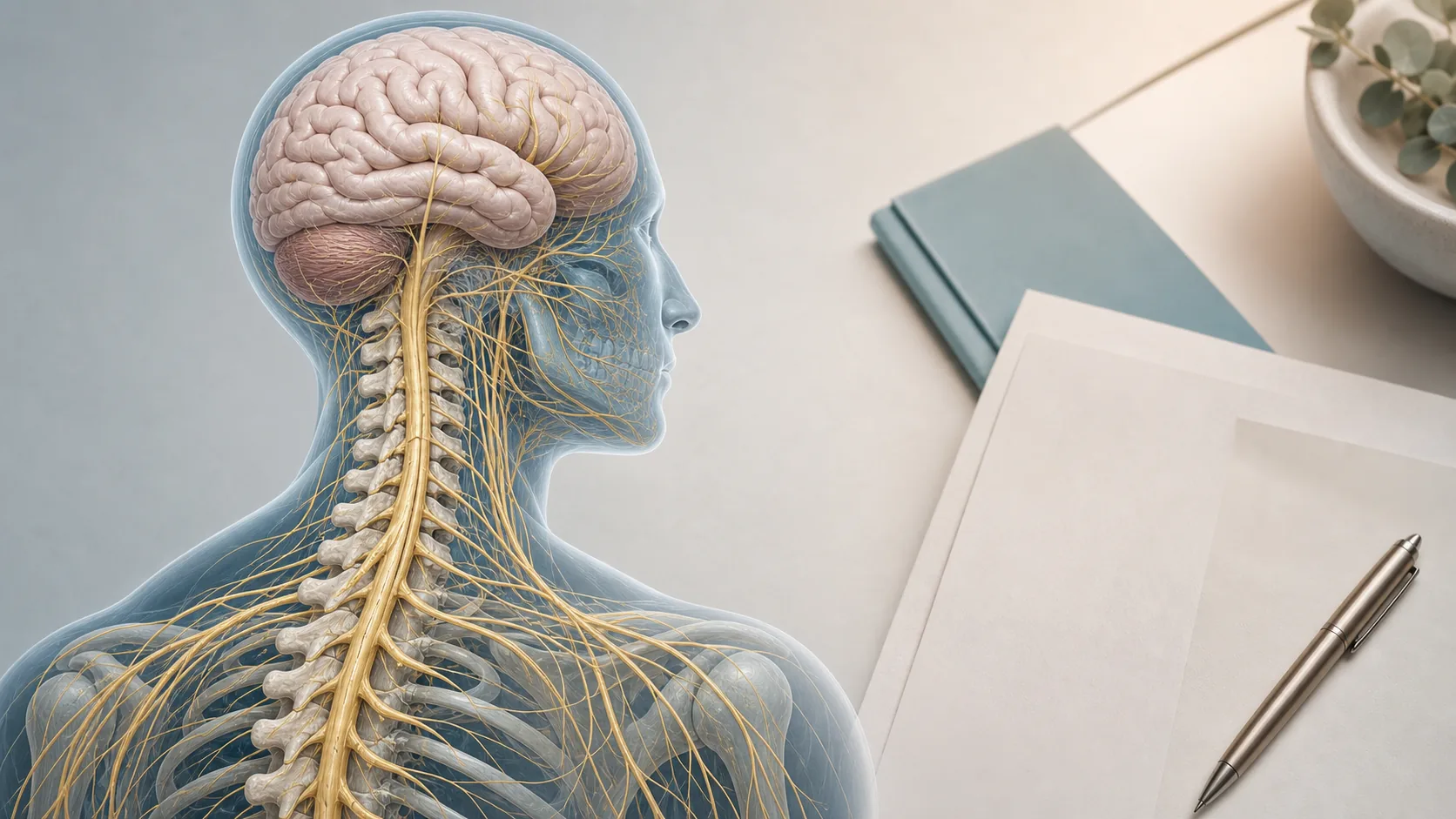
Cranial nerves control functions including vision, eye movement, facial sensation, facial movement, hearing, balance, swallowing and tongue movement. A crash can injure a nerve directly, through skull or facial fracture, or through brain injury. The assessment must identify the particular nerve and functional loss.
Motor accident mechanism
What can happen in a motor accident?
Rear-end crash
Head contact or skull-base force can affect vision, facial sensation, smell, hearing or facial movement.
Side-impact crash
Orbital, temporal bone or facial fracture may damage an optic, trigeminal, facial or vestibulocochlear pathway.
Motorcycle fall
Helmet and facial impact may produce fracture, traction or post-surgical cranial nerve injury.
Pedestrian impact
Direct facial and head trauma may affect eye movement, mastication, facial sensation or swallowing.
Injuries and diagnoses that may follow
- optic or ocular motor nerve injury affecting vision or diplopia
- trigeminal sensory loss or mastication weakness
- facial nerve paralysis or weakness
- vestibulocochlear injury affecting hearing or balance
- glossopharyngeal, vagal or hypoglossal injury affecting swallowing, voice or tongue movement
Symptoms to record accurately
- double vision, visual loss or abnormal eye movement
- facial numbness, altered sensation or chewing weakness
- facial asymmetry, incomplete eye closure or loss of expression
- hearing loss, tinnitus, vertigo or imbalance
- voice, swallowing, taste or tongue-movement difficulty
Urgent health warning
Sudden visual loss, new facial weakness, severe swallowing difficulty, airway symptoms or other acute focal neurological signs require urgent medical assessment.
Clinical evidence
What objective findings and records matter?
The claimant should not be assessed under a general “cranial nerve damage” label. Ophthalmology, ENT, neurology, maxillofacial or speech evidence may be needed depending on the nerve and the function affected.
| Record or test | What it can establish | What it cannot establish alone |
|---|---|---|
| Focused cranial nerve examination | Maps pupils, eye movements, facial sensation and movement, hearing, palate, voice and tongue function. | A symptom description without nerve localisation does not establish the injury. |
| Ophthalmology or orthoptic assessment | Measures acuity, fields, diplopia, ocular movement and optic function. | Visual impairment must use the applicable visual-system method and specialist evidence. |
| ENT, audiology or vestibular testing | Assesses hearing, vestibular function and temporal-bone consequences. | Tinnitus or dizziness alone does not prove eighth-nerve impairment. |
| Imaging and operative records | May show skull-base, orbital, temporal bone or facial fracture and surgical findings. | Fracture location does not automatically prove permanent nerve loss. |
Part 5 classification
Is the injury threshold or non-threshold?
An objectively established cranial nerve injury is a neurological injury and may support non-threshold classification. Facial pain, dizziness, tinnitus, visual complaints or altered sensation without a medically established nerve or other non-threshold injury do not determine the classification by themselves.
Evidence consistent with a threshold classification
- subjective facial symptoms without reproducible deficit
- dizziness without objective vestibular dysfunction
- visual complaint without diagnosed ocular or nerve injury
- psychological distress without a recognised psychiatric illness
Evidence that may support a non-threshold injury
- documented cranial nerve palsy or paralysis
- objective trigeminal sensory or motor loss
- specialist-confirmed optic, vestibular or auditory injury
- skull or facial fracture with correlated nerve deficit
Separate questions: threshold injury classification does not set WPI, and receiving statutory benefits does not automatically create a common law damages entitlement.
Part 6 permanent impairment
How is WPI assessed for this injury?
Part 6 uses the applicable AMA4 Chapter 4 cranial-nerve table, subject to specific modifications. The assessor rates the function actually lost rather than assigning a percentage from the nerve name.
| Assessment question | Applicable method | Important limit |
|---|---|---|
| Trigeminal nerve | Clause 6.173 modifies AMA4 Chapter 4 Table 9 and weights the ophthalmic division at 40% and the maxillary and mandibular divisions at 30% each. | Pain or tingling must be distinguished from reproducible sensory disturbance and motor loss. |
| Facial nerve | Clause 6.174 and AMA4 Table 10 apply; “total facial paralysis” means loss of function of all facial nerve branches. | A small area of weakness is not total facial paralysis. |
| Other cranial nerves | AMA4 Chapter 4 Tables 7-12 and the visual, hearing or vestibular Part 6 provisions apply according to the function affected. | Visual impairment requires ophthalmologist assessment under clause 6.172. |
- Identify the nerve, laterality and objective function lost.
- Use visual, hearing or vestibular specialists where Part 6 requires them.
- Avoid combining the same facial, visual or balance loss under more than one method.
- Consider pre-existing hearing, vision, facial palsy or neuropathy using the same function-specific evidence.
What does not establish the result by itself?
- facial pain alone
- tinnitus or dizziness alone
- a fracture near a nerve without deficit
- a photograph without clinical examination
- adding overlapping visual or vestibular ratings
Accident-specific examples
Orbital fracture with persistent diplopia
Ophthalmology and orthoptic evidence should identify the affected movement and visual function. The fracture does not itself set the cranial nerve percentage.
Facial weakness limited to one branch
Clause 6.174 prevents that deficit being described as total facial paralysis. The actual branch and function must be assessed.
Facial numbness after maxillofacial surgery
A trigeminal division may be involved. The sensory distribution, causation and Table 9 modification require specialist correlation.
Claim file preparation
Evidence checklist
Practical next steps
What should you do next with a cranial nerve injury claim?
Start with the insurer's most recent written decision and identify what is actually disputed: treatment, weekly payments or work capacity, threshold injury, permanent impairment, causation, or damages. These are separate questions and may require different evidence and review procedures. Record the date of the decision and every review deadline shown before gathering further material.
- 01
Preserve the claim and the decision under review
Keep the claim number, accident date, insurer letter, certificate of fitness and any internal review or Personal Injury Commission correspondence together. Do not assume that a treatment approval or payment of statutory benefits decides fault, damages eligibility or WPI.
- 02
Obtain evidence that answers the disputed issue
For this injury, the useful starting material includes acute head and facial examination and neurologist or neurosurgeon report. Clinical testing may include Focused cranial nerve examination and Ophthalmology or orthoptic assessment. Ask the treating practitioner to record the diagnosis, accident causation, objective findings, treatment response and current functional limits rather than symptoms alone.
- 03
Use the correct review process
Compare the insurer's reasons with the records it relied on. A threshold-injury decision, treatment refusal, weekly-payment decision and WPI assessment do not all follow the same review process. The decision letter should identify available internal review or dispute steps and the applicable deadline.
If the decision, medical material or deadline is unclear, send the key documents for a focused review before lodging a broad objection. See the CTP disputes guide or contact NSW CTP Claim. Advice depends on the facts, evidence and current law; a review cannot guarantee a claim outcome.
Assessment source
Cranial nerve impairment source
Assessment source: Motor Accident Guidelines v10.1 clauses 6.156-6.176, especially 6.172-6.174; AMA4 Chapter 4 Tables 7-12 only as adopted and modified by Part 6.
Threshold injury: A verified cranial nerve injury may be non-threshold. Symptoms without objective nerve or other structural injury do not establish that classification.
What the assessor checks
- trigeminal Table 9 modification
- facial paralysis definition
- ophthalmologist requirement
- function-specific cranial nerve assessment
What does not establish the result by itself
- symptom alone
- fracture location
- photograph alone
- overlapping ratings
Official sources
Related NSW CTP guides
Free claim check
Review the diagnosis, insurer decision and evidence together
Send the accident date, insurer decision, relevant hospital or specialist reports, and any deadline shown. NSW CTP Claim is a specialised service of Stephen Young Lawyers. Legal services are provided by Stephen Young Lawyers.
Frequently asked questions
- Which doctor assesses a cranial nerve injury?
- It depends on the function. Neurology, ophthalmology, ENT, maxillofacial, audiology or speech pathology evidence may be needed.
- Does facial numbness prove trigeminal injury?
- Not by itself. The sensory loss should be reproducible, anatomically mapped and medically linked to the accident or treatment.
- Is partial facial weakness total paralysis?
- No. Clause 6.174 states that total facial paralysis means loss of all facial nerve branches.
- Can vision and cranial nerve WPI be combined?
- Only according to the applicable Part 6 methods and without counting the same visual function twice.
- Can tinnitus alone establish eighth-nerve WPI?
- No automatic conclusion follows. Hearing and vestibular assessment require the applicable objective and specialist evidence.