
Brain injury claim
Concussion after a motor accident
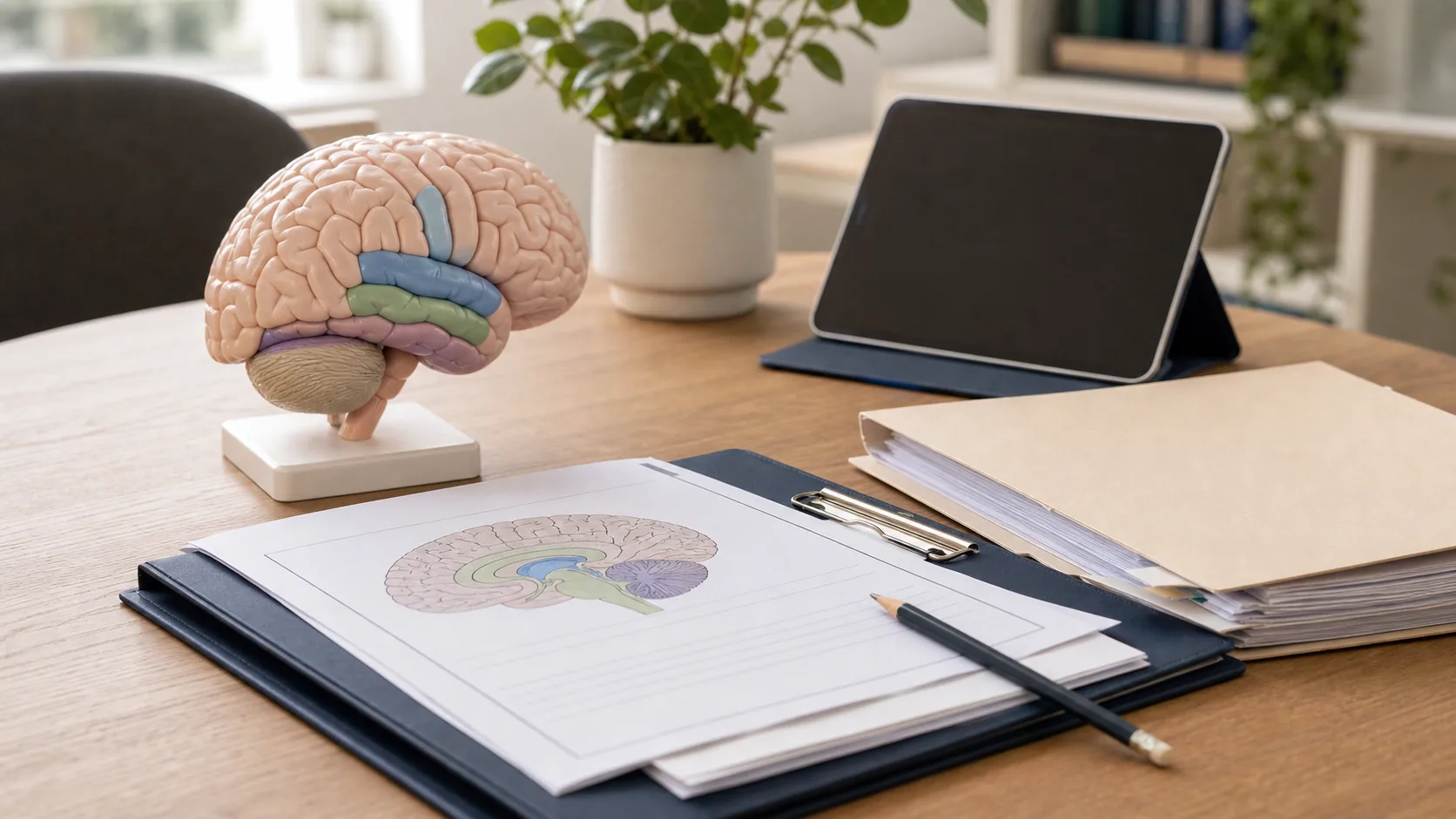
Concussion is a mild traumatic brain injury caused by force transmitted to the brain. A person may have a concussion without a skull fracture or an abnormal routine scan. For a NSW CTP claim, the diagnosis, accident timing, recovery course and functional effects must be separated from the later and different question of permanent impairment.
Motor accident mechanism
What can happen in a motor accident?
Rear-end crash
Rapid acceleration and deceleration can move the brain within the skull even where the head does not strike the vehicle.
Side-impact crash
Head contact with a window, pillar or airbag and rotational force may cause concussion with neck and vestibular symptoms.
Motorcycle fall
Helmeted riders can sustain concussion from ground impact or rapid rotational force without a penetrating injury.
Pedestrian impact
Vehicle contact followed by a fall can cause direct head impact, brief altered awareness and combined brain, neck or balance injury.
Injuries and diagnoses that may follow
- uncomplicated concussion or mild traumatic brain injury
- concussion with brief loss or alteration of consciousness
- concussion with post-traumatic amnesia
- associated cervical, vestibular, visual or cranial nerve injury
- a separate psychological injury arising from the crash or recovery
Symptoms to record accurately
- headache, nausea or sensitivity to light and noise
- dizziness, imbalance or motion sensitivity
- slowed thinking, poor concentration or short-term memory difficulty
- fatigue, sleep disturbance, irritability or emotional change
- temporary confusion, altered awareness or a gap in memory
Urgent health warning
Seek urgent medical assessment after a head injury for worsening headache, repeated vomiting, seizure, increasing drowsiness or confusion, weakness or numbness, slurred speech, vision change, fluid or blood from the ear or nose, or new bladder or bowel loss.
Clinical evidence
What objective findings and records matter?
Concussion is a clinical diagnosis. Early records are important because the examination may later normalise, while a normal CT or MRI does not by itself exclude concussion. The records still need to identify the accident-related injury rather than merely list symptoms.
| Record or test | What it can establish | What it cannot establish alone |
|---|---|---|
| Ambulance and emergency records | May record the accident mechanism, Glasgow Coma Scale, loss or alteration of consciousness, post-traumatic amnesia, vomiting and early neurological observations. | A normal score at one time point does not reconstruct an earlier period of confusion or establish permanent impairment. |
| GP or concussion assessment | Documents symptom onset, neurological examination, balance, cognition, recovery and referrals. | A symptom checklist alone does not identify the cause or set WPI. |
| CT or MRI | Excludes or identifies haemorrhage, fracture or structural brain injury when clinically indicated. | Normal imaging does not exclude concussion; abnormal imaging must still be linked to the accident and findings. |
| Functional and rehabilitation records | Show tolerance for screens, travel, work, study, multitasking and daily routines over time. | Self-report without clinical chronology does not by itself establish a permanent neurological category. |
Part 5 classification
Is the injury threshold or non-threshold?
A medically established accident-related concussion is not simply a muscle, tendon, ligament or other soft tissue injury. It may support a non-threshold classification. However, headache, dizziness, poor concentration or anxiety without a supported brain injury diagnosis do not by themselves prove a non-threshold neurological injury. Any psychiatric condition is classified under the separate psychological rules.
Evidence consistent with a threshold classification
- symptoms recorded without a supported neurological diagnosis
- headache or dizziness attributed only to a neck soft tissue injury
- psychological symptoms that do not amount to a recognised psychiatric illness
- an imaging finding that is incidental or not causally related
Evidence that may support a non-threshold injury
- a contemporaneous clinical diagnosis of concussion or traumatic brain injury linked to the crash
- documented loss or alteration of consciousness or post-traumatic amnesia supporting the diagnosis
- objective structural intracranial injury
- a separately established nerve, vestibular or recognised psychiatric injury outside the threshold definition
Separate questions: threshold injury classification does not set WPI, and receiving statutory benefits does not automatically create a common law damages entitlement.
Part 6 permanent impairment
How is WPI assessed for this injury?
Concussion symptoms do not automatically produce WPI. If permanent accident-related neurological impairment remains, Part 6 directs central nervous-system assessment to AMA4 Chapter 4 as modified by clauses 6.156-6.176. The assessor identifies the impaired function and gives reasons for a specific category and percentage.
| Assessment question | Applicable method | Important limit |
|---|---|---|
| Cognition and mental status | Clauses 6.164-6.169 use the modified Clinical Dementia Rating in Tables 6.9 and 6.10 where the required brain-injury evidence exists. | Poor concentration alone is not a CDR score and a claimant should not self-rate from symptoms. |
| Behaviour or mood from organic brain injury | Clause 6.170 applies AMA4 Chapter 4 Table 3 after the clause 6.164 objective prerequisites are addressed. | A separate psychiatric illness is assessed by PIRS, not added as an organic brain rating without justification. |
| Headache | Clause 6.162 generally includes headache and pain in the structural or neurological impairment. | There is no separate AMA4 Pain chapter allowance under the CTP Guidelines. |
- The assessor considers the highest applicable rating among aphasia, mental status, emotional/behavioural disturbance and consciousness/awareness rather than adding all four.
- Psychometric or neuropsychological testing, if available, must be considered with the clinical history and validity context.
- Seizure, vestibular, cranial nerve, visual or other neurological impairments use their applicable methods and are combined only where Part 6 permits.
- A separate psychiatric WPI is assessed independently and cannot be combined with physical WPI to pass the greater-than-10% test.
Modified Clinical Dementia Rating for brain injury
Table 6.9 considers memory, orientation, judgment and problem-solving, community affairs, home and hobbies, and personal care. Table 6.10 then maps the supported overall CDR score to a WPI class. Clause 6.164 must be satisfied before this mental-status method is used.
| CDR score | Table 6.10 class | Class range |
|---|---|---|
| 0.5 | Class 1 | 1-14% WPI |
| 1.0 | Class 2 | 15-29% WPI |
| 2.0 | Class 3 | 30-49% WPI |
| 3.0 | Class 4 | 50-70% WPI |
The class is a range, not an automatic percentage. The medical assessor must select and explain the specific percentage from the complete clinical, psychometric and functional evidence.
What does not establish the result by itself?
- headache or brain fog alone
- a normal or abnormal scan read without the clinical history
- a diagnosis label copied forward without examination details
- one good day or one poor cognitive screening result
- assuming ongoing symptoms equal permanent WPI
Accident-specific examples
Rear-end crash with early confusion and normal CT
A normal CT does not exclude concussion. The emergency history, altered awareness, symptom evolution and later function may support the diagnosis, but permanent WPI still requires the Part 6 criteria.
Headache after a crash with no brain-injury diagnosis
Headache may arise from concussion, cervical injury, migraine or psychological factors. The symptom alone does not establish non-threshold brain injury or a neurological WPI category.
Persistent cognitive difficulty after documented concussion
A neurologist or rehabilitation specialist may need hospital records, neuropsychological evidence and real-world function before applying the modified CDR method.
Claim file preparation
Evidence checklist
Practical next steps
What should you do next with a concussion after a motor accident claim?
Start with the insurer's most recent written decision and identify what is actually disputed: treatment, weekly payments or work capacity, threshold injury, permanent impairment, causation, or damages. These are separate questions and may require different evidence and review procedures. Record the date of the decision and every review deadline shown before gathering further material.
- 01
Preserve the claim and the decision under review
Keep the claim number, accident date, insurer letter, certificate of fitness and any internal review or Personal Injury Commission correspondence together. Do not assume that a treatment approval or payment of statutory benefits decides fault, damages eligibility or WPI.
- 02
Obtain evidence that answers the disputed issue
For this injury, the useful starting material includes ambulance and emergency department records and first GP or hospital notes recording the onset of symptoms. Clinical testing may include Ambulance and emergency records and GP or concussion assessment. Ask the treating practitioner to record the diagnosis, accident causation, objective findings, treatment response and current functional limits rather than symptoms alone.
- 03
Use the correct review process
Compare the insurer's reasons with the records it relied on. A threshold-injury decision, treatment refusal, weekly-payment decision and WPI assessment do not all follow the same review process. The decision letter should identify available internal review or dispute steps and the applicable deadline.
If the decision, medical material or deadline is unclear, send the key documents for a focused review before lodging a broad objection. See the CTP disputes guide or contact NSW CTP Claim. Advice depends on the facts, evidence and current law; a review cannot guarantee a claim outcome.
Assessment source
Concussion classification and impairment source
Assessment source: Motor Accident Guidelines v10.1 clauses 5.1-5.12 and 6.156-6.176, especially 6.160 and 6.162-6.170; AMA4 Chapter 4 only as modified by Part 6.
Threshold injury: A supported brain injury may be non-threshold. Symptoms alone do not establish a brain injury, and psychiatric symptoms must be classified separately under the current psychological rules.
What the assessor checks
- brain-injury history and objective prerequisites
- modified CDR method
- highest-of-four central categories rule
- no separate WPI for headache or pain
What does not establish the result by itself
- symptoms alone
- imaging alone
- diagnosis label alone
- self-calculated CDR or WPI
Official sources
Related NSW CTP guides
Free claim check
Review the diagnosis, insurer decision and evidence together
Send the accident date, insurer decision, relevant hospital or specialist reports, and any deadline shown. NSW CTP Claim is a specialised service of Stephen Young Lawyers. Legal services are provided by Stephen Young Lawyers.
Frequently asked questions
- Can concussion occur without hitting my head?
- Yes. Rapid acceleration, deceleration or rotational force can transmit enough force to the brain. The mechanism and early clinical history still need to support the diagnosis.
- Does a normal CT mean there was no concussion?
- No. CT is mainly used to identify problems such as bleeding or fracture. Concussion is commonly a clinical diagnosis, but the diagnosis and causation still require medical evidence.
- Is concussion automatically non-threshold?
- No result should be assumed from a symptom label. A medically established brain injury may support non-threshold classification; symptoms without a supported neurological injury may not.
- Does persistent concussion automatically create WPI?
- No. WPI requires a permanent assessable functional impairment under the applicable Part 6 method, not the duration of symptoms alone.
- Can psychological symptoms be added to concussion WPI?
- Physical neurological and psychiatric impairment are assessed separately. They cannot be combined to decide whether impairment is greater than 10%.