
QBE CTP claim NSW: contact, evidence pack, review and PIC steps
Practical NSW claimant guide for QBE CTP Claim, including contact details, what to prepare before lodging, and how to handle time-sensitive insurer decisions.
Last reviewed 6 June 2026
Summary
For a QBE CTP claim in NSW, first confirm QBE Insurance (Australia) Limited is the correct insurer on the decision letter, green slip, registration record, or written claim correspondence. Then send a concise pack that identifies the claimant, accident date, vehicle details, claim number if known, the benefit or liability issue, the live review deadline, and the evidence attached. If QBE has refused treatment, reduced or stopped weekly payments, queried PAWE, raised fault or threshold injury, or requested more documents close to a deadline, preserve the earliest review or PIC date first and separate the response into treatment, weekly payment, PAWE, liability, threshold injury and Personal Injury Commission (PIC) headings.
Deadline Warning
If your deadline is under 7 days, lodge the core pack now, say what evidence is still coming, and date the supplement plan.
Review guideBefore you contact QBE
- 1collect accident date, location, registration and involved vehicle details
- 2check the insurer entity on the decision letter or registration evidence, not just the broader group brand
- 3prepare initial medical records and certificate/capacity information
- 4keep receipts and treatment referral chronology
- 5write a short timeline of symptoms, work impact, and treatment progression
Official insurer check before you send anything urgent
Before you lodge, cross-check the insurer against the SIRA NSW CTP insurer list, the operative decision letter, the claim reference, and the green slip or registration material you already have. If the brand, entity name, or contact trail do not line up, preserve time first and ask in writing for the exact NSW CTP insurer entity and file identity.
Check the current SIRA NSW CTP insurer list →If the insurer tells you to lodge, argue, or wait somewhere else
Treat that as a pathway-risk issue, not just a service message. NSW statutory benefits, internal review rights, and PIC time limits do not necessarily pause because an insurer suggests a different forum, another insurer, or more documents first.
- preserve the live NSW deadline first, even if insurer identity, forum, or extra documents are still being argued about
- keep the insurer position in writing, then separate routing questions from treatment, weekly payments, threshold, PAWE, or liability issues
- if the facts may point to an uninsured, unidentified, interstate, or Nominal Defendant pathway, move to that matching route quickly instead of leaving the whole file inside an ordinary insurer-contact loop
QBE routing notes that matter in practice
QBE uses a dedicated NSW CTP claims contact route. The practical gain for claimants is speed when the first written contact is structured: identify the file, identify the issue, identify the deadline, and identify the documents that support the next step.
Practical checks
- label the first contact clearly as new claim, update, dispute, or urgent review matter
- if payments or treatment are already affected, attach the operative decision and the most current treating support together
- keep the chronology short and dated so later review material can be built around the same sequence
If there is a live dispute
- If QBE has made a decision with short time limits, preserve the review right first and avoid holding the file open for one last report.
- Where there are mixed issues, ask for decision-specific reasons and organise the response under separate headings from the start.
What to put in the first insurer email or upload
A short, structured first pack usually works better than a long narrative email. The goal is to help the insurer identify the file, identify the issue, and identify the deadline without guessing.
Subject line
Start with claimant name, accident date, registration, and claim number.
Contact type
Say if it is a new lodgement, update, internal review, or urgent dispute.
Deadlines
If a statutory deadline is running, write the exact date to preserve rights.
Attachments
Group by function: decision, accident facts, medical support, and income.
QBE CTP evidence map by decision type
QBE contact details are useful only if the first packet also answers the practical review questions. The packet should identify the correct QBE NSW CTP file, the decision or benefit stream affected, the evidence relied on now, the material still being obtained, and the deadline that must be protected. Keep the tone factual and do not assume that a request for more documents extends time.
QBE file identity and claim reference
Keep the QBE letter, claim number, registration or green slip evidence, accident date, vehicle details, email receipts, and any upload confirmation together. If the letter refers to another entity or an unclear file reference, ask for written confirmation without delaying any live review step.
Treatment or care expense dispute
Attach the operative QBE decision, referral, clinical reason, treatment plan or quote, and treating notes linking the requested expense to the motor accident injury. If delay may affect symptoms, recovery or return to work, say that plainly and support it with treating evidence where available.
Weekly payments, PAWE or work capacity
Use the current certificate of capacity, payslips, tax or business records where relevant, pre-accident weekly earnings (PAWE) material, ordinary duties, reduced-hours evidence, and a short dated chronology of how injury changed work capacity.
Fault, threshold injury or PIC escalation
Separate accident-mechanism evidence from medical threshold evidence. Put the QBE decision first, then an issue index, chronology, medical records, wage evidence, correspondence trail, and any supplement date so the bundle can move to internal review or the Personal Injury Commission (PIC).
How to choose the next QBE review pathway
The next QBE step depends on the legal character of the decision, not simply on the insurer brand. A treatment dispute, weekly payment decision, PAWE calculation, threshold injury assessment, fault issue, and medical dispute may each require a different evidence focus and review route. This page is general information only, and the correct pathway depends on the wording of the QBE letter and the time already elapsed.
Internal review risk
Where internal review is required or prudent, preserve the earliest date first. State the QBE decision, the part challenged, the outcome sought, the evidence attached, and any documents that will follow by a dated supplement.
Medical or threshold injury issue
Keep clinical records, imaging, treating opinions, functional restrictions and symptom chronology together. Avoid broad labels; show how the evidence relates to the disputed injury, treatment, capacity or threshold question.
Merit or PIC-ready issue
For PAWE, weekly payment or statutory benefit disputes, organise wage records, tax or business material, certificates of capacity and correspondence so a reviewer can follow the calculation and the dates without reconstructing the file.
QBE CTP checklist for a review-ready first pack
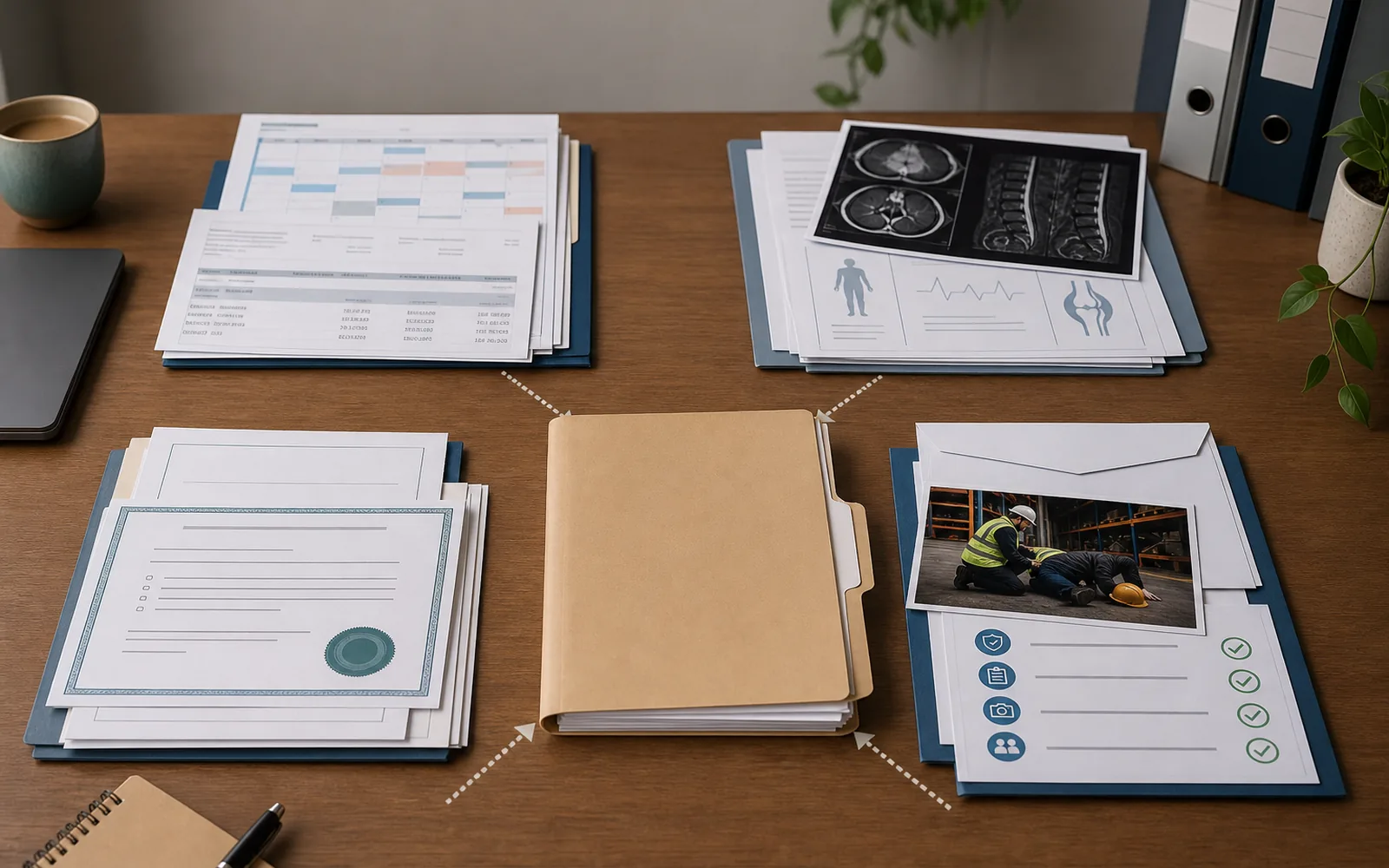
A QBE CTP packet should be compact enough for first contact but structured enough for later review. The practical order is decision letter, deadline note, issue index, accident chronology, medical support, work-capacity or PAWE evidence, correspondence trail, and documents still outstanding with a supplement date. That structure helps first lodgement, internal review, and PIC preparation without overstating legal or medical conclusions.
File opening details
Name the claimant, accident date, location, vehicle registration, QBE claim number if known, police event number if available, and the contact person or email trail. Put the most reliable file identifier in the subject line and on the first page.
Medical and treatment support
Include hospital or GP records, certificates of capacity, referrals, quotes, treatment plans, and treating reasons that link the expense or incapacity to the crash injury. Keep symptoms and function described in practical terms.
Income and PAWE material
Use payslips, rosters, employer letters, tax records or business records where relevant, and explain any gap or irregular earnings pattern. If records are still being obtained, identify them and give QBE a supplement date.
Escalation and deadline control
List the earliest live date, the decision being challenged, and the requested next step. Keep treatment, weekly payments, PAWE, liability, threshold injury and PIC issues under separate headings so one dispute stream does not bury another.
When this insurer page is not the right starting point
An insurer contact page helps only when the insurer identity is already reliable and the immediate task is first contact or a clean upload. Use the matching pathway for more complex issues.
Unsure of the insurer file
Start with insurer identification if the brand, entity, fleet ownership, or registration trail is still unclear.
Open guide →Uninsured or unidentified
Move to the Nominal Defendant, uninsured, or unidentified-vehicle pathway that matches the evidence.
Open guide →Mixed insurer decisions
Treat that as a routing problem. The pathway map is the faster way to separate the streams.
Open guide →Full claim-start structure
If you are at the beginning, use the broader lodgement guide first to understand the evidence needed.
Open guide →If QBE asks for more documents while a deadline is still running
Treat the document request and the review deadline as separate problems. Unless QBE confirms an extension in writing, preserve the right first.
- file the core review pack by the live date, even if one report or wage document is outstanding
- identify the missing items precisely and give a dated supplement plan
- split the response by issue heading (treatment, weekly payments, threshold) so each pathway stays review-ready