
Raad: due inquiry and search for an unidentified vehicle
This decision matters because an unidentified vehicle claim does not fail just because there is no rego or named driver. The real question is whether the claimant carried out a prompt, documented, and credible search, and whether the remaining uncertainty is explained by the evidence rather than by inaction.
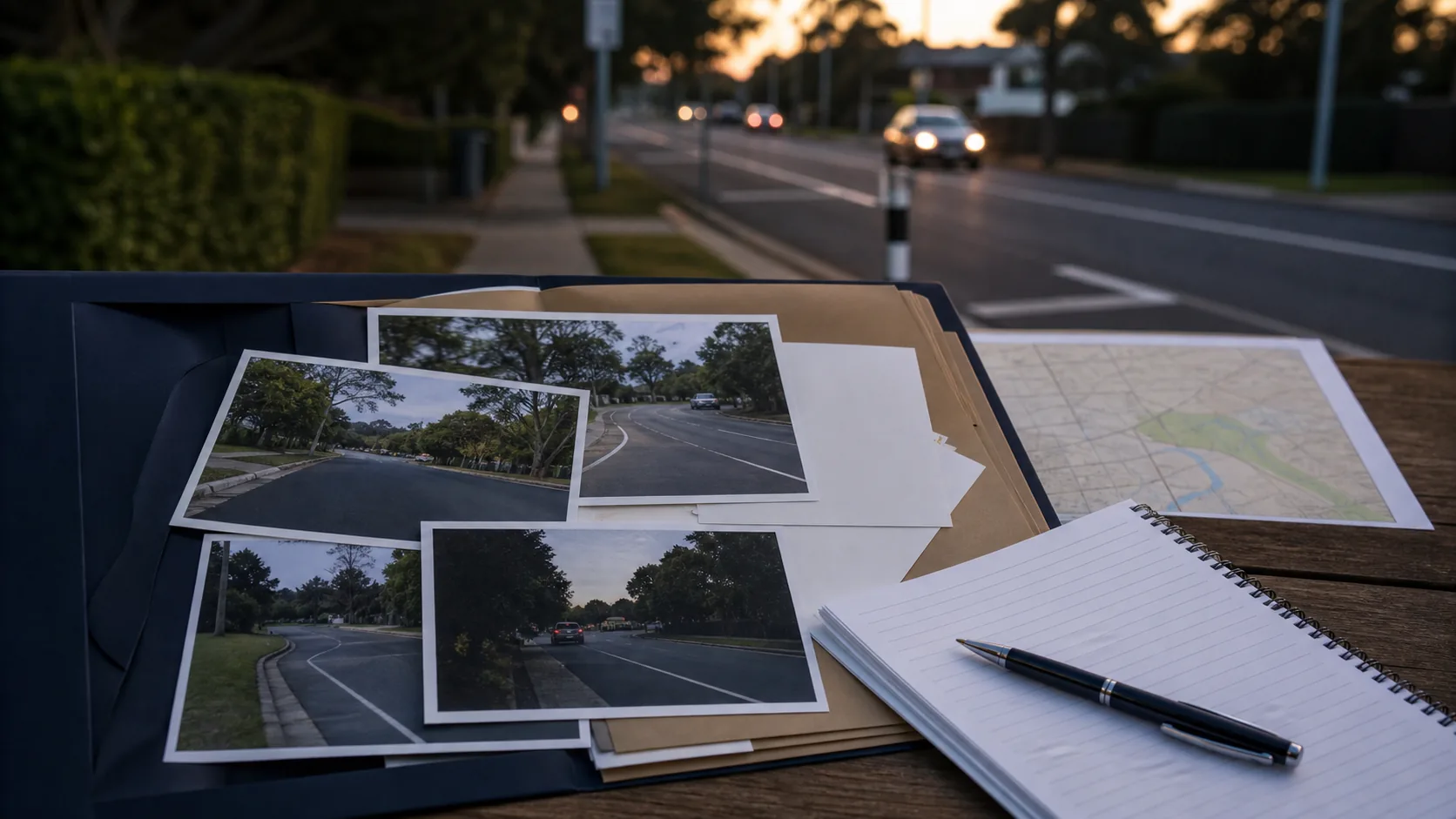
By Herman Chan for Stephen Young Lawyers. Published 10 April 2026, updated 19 May 2026.
General information only, not legal advice. This case is most useful where an insurer says a claimant did not do enough to identify an unknown at-fault vehicle before claiming against the Nominal Defendant.
Case note source and analysis
Case note at a glance
This note identifies the source decision before drawing practical lessons. It should be read with the full judgment or PIC decision and the current NSW CTP legislation, Guidelines and insurer/PIC pathway that apply to the individual claim.
- Full case name
- Raad v Nominal Defendant by its agent Allianz Australia Insurance Limited
- Neutral citation
- [2026] NSWPIC 173
- Court or PIC division
- Personal Injury Commission of NSW, Motor Accidents Division
- Decision date
- 2 April 2026
- Decision-maker
- PIC Member
- Issue
- Whether the claimant had made due inquiry and search to identify an unidentified vehicle for a Nominal Defendant claim.
- Authoritative decision
- Raad v Nominal Defendant by its agent Allianz Australia Insurance Limited [2026] NSWPIC 173
- Author / reviewer
- Herman Chan; reviewed by Stephen Young Lawyers
- Date last checked
- 24 June 2026
Material facts
- The claimant was injured as a pedestrian after a vehicle left a driveway and could not later be identified.
- The claimant reported the accident to police and made inquiries about CCTV and witnesses, with later steps also taken after a delay.
- The Nominal Defendant argued the search was insufficient or too late.
Decision
The Commission accepted that the claimant had made sufficient due inquiry and search in the circumstances, so the unidentified-vehicle pathway was not defeated on that basis.
Legal principle
Due inquiry and search is fact-sensitive. Prompt police reporting, CCTV or witness attempts and a clear inquiry log can be decisive, but later delay may still need explanation.
Limitations of the decision
The decision does not remove the need for urgent, practical searches. A claimant who does not report promptly, preserve CCTV opportunities or document inquiries may face a different result.
Practical significance
Anyone receiving an insurer letter about due inquiry and search should build a dated search log: police report, registration attempts, CCTV requests, witness approaches, location checks and reasons any step could not be done earlier.
Key point for NSW unidentified-vehicle CTP claimants
The answer from Raad is practical: NSW unidentified-vehicle claims turn on evidence of effort, not perfect results. If you moved quickly, followed real leads, and kept a usable record of what you did, a claim against the Nominal Defendant can still survive even when the at-fault vehicle remains unknown. The decision does not remove the need for due inquiry and search, and it does not mean delay is harmless. It shows that the PIC will look at the whole factual picture.
What happened?
The claimant sought statutory benefits through the Nominal Defendant pathway because the alleged at-fault vehicle could not be identified. The live issue was whether section 2.30 “due inquiry and search” had been satisfied.
Delay in some inquiry steps was contested. Even so, the Member accepted that the claimant had done enough to satisfy the legal standard and that the identity of the at-fault vehicle could not be established.
For injured people, that distinction matters. The law does not ask for the impossible, but it does require a real search. A claimant who only says “I could not get the details” is in a weaker position than a claimant who can show police reporting, witness checks, CCTV requests, location notes, photographs, and insurer correspondence.
This page should be read with the broader uninsured vehicle CTP guide and the Nominal Defendant comparison guide, because the correct route depends on whether the vehicle was unidentified, uninsured, or identified after further inquiry.
Who this case helps most
- claimants in hit-and-run or unidentified-vehicle matters
- people facing insurer arguments that they did not do enough to find the other vehicle
- cases where there is no rego, incomplete witness detail, or limited CCTV
- disputes where the insurer focuses on delay rather than on what was actually done
What the PIC focused on
- the section 2.30 due inquiry and search requirement in its real factual context
- whether the inquiry steps were genuine, specific, and recorded rather than asserted later in broad terms
- how delay affected reliability, without treating delay as an automatic knockout point
- whether the vehicle identity remained unavailable despite those steps
Practical process after an unidentified-vehicle crash
- Record the accident time, location, lane, direction of travel, weather, lighting, and any description of the other vehicle.
- Report the accident to police and keep the event number, report reference, and any later police communication.
- Seek treatment and keep records linking symptoms to the motor accident, especially if shock or pain develops after the scene.
- Ask promptly about dashcam, bus, taxi, rideshare, shop, home, council, transport, or service-station CCTV before footage is overwritten.
- Give the insurer a clear chronology, then update it when a new inquiry is made or a lead goes nowhere.
The right pathway can overlap with hit-and-run CTP claims, unidentified vehicle claims, and broader Nominal Defendant claims. The label matters less than preserving the evidence early.
If the insurer later disputes liability, keep the process separate from medical issues such as threshold injury or WPI assessment. Raad was about whether the unidentified-vehicle route was available, not whether the claimant had a particular injury threshold outcome.
Evidence checklist for live claims
- police event number and any follow-up with police
- photos of scene, road layout, debris, and damage points
- a dated chronology of every search step taken
- witness calls, texts, letters, door knocks, or social-media enquiries if used
- CCTV enquiries to shops, homes, councils, transport operators, or nearby premises
- insurer correspondence showing what was requested and when
Mistakes this case helps you avoid
- waiting too long before starting search steps
- relying on memory instead of keeping a dated inquiry log
- telling the insurer you made enquiries without proving what those enquiries were
- assuming a missing rego automatically ends the claim
- treating an insurer request as informal when it may later become the main dispute about due inquiry and search
What to send the insurer or Personal Injury Commission (PIC)
A useful evidence bundle is usually chronological. It should show what was known on the day, what was done soon after, what was requested from third parties, and why the vehicle still could not be identified. If the matter reaches the Personal Injury Commission, this helps the decision-maker test the reliability of the search without relying only on broad recollection.
- one timeline with dates, times, names, and outcomes for each inquiry
- copies or screenshots of emails, texts, call logs, police references, and CCTV requests
- a short explanation for any gap or delay, without overstating certainty
- medical certificates and treatment notes that help connect the accident to the claimed injuries
Plain-English takeaway
If the other driver cannot be identified, your case often lives or dies on process discipline. Start inquiry steps early, keep a dated log, and preserve every lead you follow, including dead ends.
In practice, a tight chronology can do more work than broad argument. Show what you did, when you did it, what each step produced, and why the vehicle still could not be identified despite those efforts.
Frequently asked questions
- What did Raad v Nominal Defendant [2026] NSWPIC 173 decide?
- The PIC found the claimant had met the “due inquiry and search” requirement in section 2.30 of the Motor Accident Injuries Act 2017, even though the at-fault vehicle could not be identified.
- Why is this important for NSW hit-and-run claimants?
- It confirms these claims do not fail just because the other vehicle cannot be identified. The real issue is whether your search steps were real, documented, and done promptly enough to be credible.
- Did the case say delay never matters?
- No. Delay remained a live issue. Delay can still hurt a claim if it weakens the reliability of your inquiry steps, causes evidence loss, or makes later reconstruction look speculative.
- What evidence should I preserve in an unidentified-vehicle claim?
- Keep police event details, photos, location and time records, witness attempts, nearby CCTV enquiries, insurer correspondence, and a dated log showing each inquiry step and outcome.
- What should I do first if the other vehicle cannot be identified?
- Report the accident, get medical treatment, preserve scene evidence, ask quickly about witnesses or CCTV, and keep a dated record of each inquiry. Time matters because footage and witness memory can disappear quickly.
Decision and official scheme sources
Full decision: Raad v Nominal Defendant by its agent Allianz Australia Insurance Limited [2026] NSWPIC 173.
For the broader NSW scheme context, compare the decision with SIRA’s public information about motor accident injury claims and the Motor Accident Guidelines. Those sources help explain the statutory-benefits framework, while the PIC decision shows how the due inquiry and search dispute was assessed on its facts.