
Motor Accident Guidelines (SIRA) — NSW CTP claims
The State Insurance Regulatory Authority (SIRA) Motor Accident Guidelines are the practical rulebook insurers are expected to follow when handling NSW CTP claims. This page explains, in plain language, the parts that usually matter most for injured people: claims handling, threshold injury, permanent impairment (WPI), and dispute resolution. General information only.
Quick answer
The State Insurance Regulatory Authority (SIRA) Motor Accident Guidelines are the practical rulebook insurers are expected to follow when handling NSW CTP claims. This page explains, in plain language, the parts that usually matter most for injured people: claims handling, threshold injury, permanent impairment (WPI), and dispute resolution. General information only.
Why this guide is structured this way
This page is written to help NSW CTP claimants understand deadlines, evidence, insurer decisions, and dispute pathways in plain language without overstating outcomes.
General information only. Your position depends on your facts, evidence, insurer response, and applicable time limits.
Top questions answered
Do the Guidelines apply to my claim?
The Guidelines apply broadly to claims in the NSW scheme, but some transitional provisions can apply depending on accident date and the specific part/clause. This website provides general information only.
Are insurers required to follow the Guidelines?
Insurers generally have licence conditions requiring compliance with relevant parts of the Guidelines. The practical implications depend on the issue and the dispute pathway.
Do the Guidelines replace the Act?
No. The Act and Regulation are primary. The Guidelines operate alongside them and set procedures/expectations under guideline-making powers.
What the Motor Accident Guidelines are
The Motor Accident Guidelines are issued by SIRA under guideline-making powers in the NSW CTP scheme. They work alongside the Motor Accident Injuries Act 2017 and the Regulation. In practical terms, the Guidelines describe processes and procedures insurers must follow when handling claims.
The parts that matter most to claimants
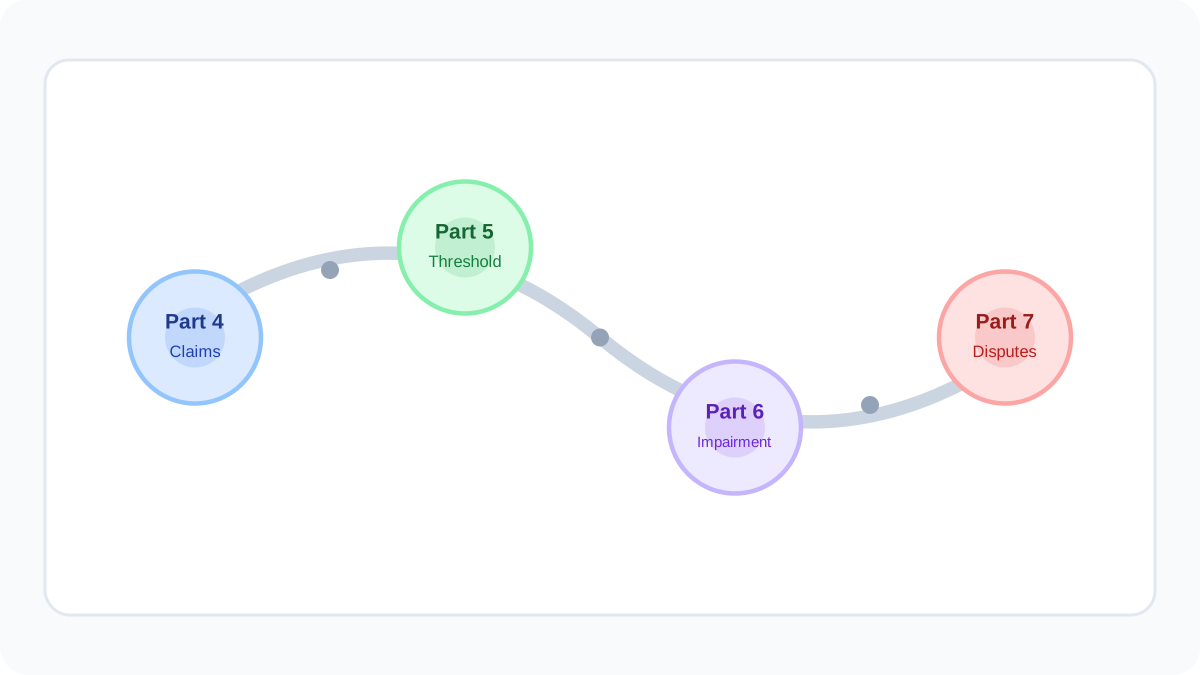
For most claimants, the most relevant parts are:
- Claims handling (Part 4): how insurers must deal with claims, communications, evidence, and decisions.
- Threshold injury (Part 5): guidance relevant to threshold injury assessments and disputes.
- Permanent impairment (Part 6): guidance relevant to WPI/permanent impairment assessment issues.
- Dispute resolution (Part 7): internal review requirements and interaction with the PIC.
This site keeps references at a general level (Part-level) unless a specific clause is essential.
How the Guidelines interact with the PIC and disputes
Disputes in NSW CTP commonly begin with an insurer internal review step, then (if unresolved) proceed to the Personal Injury Commission (PIC) using the correct dispute pathway (merit vs medical).
Read: Dispute resolution under the Guidelines, internal review, and merit review vs medical assessment.
For common real-world dispute paths, also see weekly payments stopped, capacity for work disputes, and PAWE calculation issues.
Where to go next
Common mistakes when people rely on the Guidelines
One common mistake is citing the Motor Accident Guidelines in a very general way without identifying which part actually applies. In practice, a claimant usually gets more traction by showing whether the issue is really about claims handling, threshold injury, permanent impairment, or dispute resolution, then matching the evidence to that pathway.
Another problem is treating the Guidelines as if they replace the Act, the medical evidence, or the insurer decision itself. They do not. The better approach is usually to use the Guidelines to structure the argument, preserve timeframes, and show why the insurer process or reasoning has gone wrong on the facts of the case.
It also helps to keep the practical dispute pages close by. For most live matters, users should be cross-checking the general Guidelines overview against internal review, merit review vs medical assessment, weekly payments stopped, and treatment refused disputes.
Evidence and dispute points that usually matter most under the Guidelines
The Guidelines usually matter most when they help explain why an insurer process, classification, or decision has gone wrong in a way that can be shown by actual records. A stronger file usually links the relevant guideline part to the insurer notice, the chronology, and the medical or wage material that answers the real dispute.
- Decision-specific pathway selection: Start by identifying whether the issue is really claims handling, threshold injury, permanent impairment, treatment, work capacity, PAWE, or broader dispute-resolution procedure.
- Chronology discipline: Keep insurer notices, certificates, treatment records, wage documents, and review correspondence in date order so any Guideline complaint can be traced to a concrete event.
- Medical consistency: Threshold injury, treatment, and WPI disputes usually become weaker where the clinical history is inconsistent across GP notes, imaging, specialist reports, rehabilitation records, and insurer medical examinations.
- Function and work evidence: Capacity, PAWE, and benefits disputes usually need practical evidence about work restrictions, hours, duties, earnings, and the real effect of the injury — not just diagnostic labels.
- Procedural readiness: The value of the Guidelines often shows up in preserved deadlines, properly framed internal reviews, and clean PIC-ready material rather than abstract legal argument on its own.
That is why the key practical pages are usually claims process guidance, threshold injury guidance, permanent impairment guidance, internal review, and the PIC.
What usually makes a stronger Guidelines-based dispute file
A good Guidelines-based file is usually organised around the question the insurer or PIC actually has to answer. That means the claimant can show not only that something feels unfair, but exactly how the process or reasoning departed from the relevant scheme pathway.
- One identified issue at a time: Keep treatment, threshold, WPI, PAWE, capacity, and liability issues separated wherever possible.
- Reason-to-evidence matching: If the insurer says treatment is not reasonable and necessary, answer that question. If it says the injury is threshold, answer the classification issue. If it says earnings are lower, answer with wage records and work history.
- Targeted treating support: The most useful reports usually explain diagnosis, causation, restrictions, treatment need, permanence, or methodology in a way that matches the actual dispute stream.
- Review-to-PIC continuity: Strong matters usually preserve the same chronology, issue framing, and document set from insurer review into any later PIC application.
- Next-step awareness: The file should be built with the likely next forum in mind, whether that is internal review, medical assessment, merit review, or settlement approval.
When Guidelines problems become real claim disputes
Guideline issues often stop looking procedural once money, treatment, or damages timing is affected. A claims-handling problem can quickly turn into stopped weekly payments, delayed surgery, a threshold classification dispute, a WPI timing fight, or a badly framed PIC application.
In practice, the escalation path usually runs through internal review first, then into the right Commission stream. That is why claimants often need to move from this overview page into more specific pathways such as weekly payments stopped, capacity disputes, treatment refused, WPI disputes, and PIC stream selection.
The real value of understanding the Guidelines is not academic. It is knowing how to turn an insurer process problem into a structured, evidence-backed review or PIC response before the dispute gets harder to fix.
Frequently asked questions
- Do the Guidelines apply to my claim?
- The Guidelines apply broadly to claims in the NSW scheme, but some transitional provisions can apply depending on accident date and the specific part/clause. This website provides general information only.
- Are insurers required to follow the Guidelines?
- Insurers generally have licence conditions requiring compliance with relevant parts of the Guidelines. The practical implications depend on the issue and the dispute pathway.
- Do the Guidelines replace the Act?
- No. The Act and Regulation are primary. The Guidelines operate alongside them and set procedures/expectations under guideline-making powers.
- Can I rely on the Guidelines in a dispute?
- Guidelines can be relevant to claims handling and internal review processes. The weight and effect depends on the dispute type and the applicable provisions.
- Where does the PIC fit?
- Many disputes escalate to the Personal Injury Commission after internal review, using the correct dispute type (merit vs medical).
- What should I do if one insurer letter mixes process, treatment, and work-capacity reasons?
- Split the letter into separate dispute tracks before responding. Identify each reason, map it to the right Guidelines pathway (claims handling, treatment/medical, capacity/benefits, or dispute procedure), and attach evidence under each track. Mixed responses often miss key tests and weaken internal review or PIC preparation.
- What if the insurer relies on one short activity snapshot to say I have recovered function?
- Treat a single snapshot as one data point, not the whole functional picture. Build a 2–4 week function timeline showing post-activity flare, sleep disruption, next-day capacity limits, medication changes, and treatment follow-up. That longitudinal record is usually more persuasive than arguing only about the isolated moment.
- Do I have to wait for every specialist report before I ask for internal review or PIC escalation?
- Usually no. If a core dispute stream is already mature, lodge it with a clear chronology and targeted evidence, then identify what is still pending and when it will be filed. Waiting for perfect completeness can unnecessarily extend payment or treatment disruption.
- The insurer asked me to sign a broad authority for "all records" before review. Should I pause everything?
- Usually not. Keep the review moving and ask for scope to be narrowed by date range, issue, and provider type so disclosure stays proportional to the dispute. Confirm in writing what you have already supplied, what is genuinely outstanding, and when targeted records can be provided.