
Threshold injury (Guidelines Part 5 — overview)
Part 5 of the SIRA Motor Accident Guidelines deals with threshold injury issues in the scheme. This page provides a general overview of how threshold injury issues arise, what evidence themes commonly matter, and how disputes are determined. General information only.
Quick answer
Part 5 of the SIRA Motor Accident Guidelines deals with threshold injury issues in the scheme. This page provides a general overview of how threshold injury issues arise, what evidence themes commonly matter, and how disputes are determined. General information only.
Why this guide is structured this way
This page is written to help NSW CTP claimants understand deadlines, evidence, insurer decisions, and dispute pathways in plain language without overstating outcomes.
General information only. Your position depends on your facts, evidence, insurer response, and applicable time limits.
Top questions answered
Is threshold injury the same as WPI?
No. Threshold injury classification and WPI/permanent impairment are separate concepts used for different entitlement questions.
Does threshold injury affect weekly payments?
Threshold injury classification can affect benefit duration. Weekly payments can also be affected by earning capacity decisions and other rules.
How is threshold injury decided?
It is evidence-driven and often determined through PIC medical pathways in disputes.
Threshold injury definition (high level)
Threshold injury is defined in the Act (s 1.6) and interacts with scheme rules about benefit duration. The Guidelines provide guidance relevant to threshold injury handling and disputes.
Evidence themes that often matter
- contemporaneous medical records and objective findings
- specialist input where diagnosis is disputed
- consistency of history over time
- targeted reports addressing the legal definition
Dispute pathway (medical)
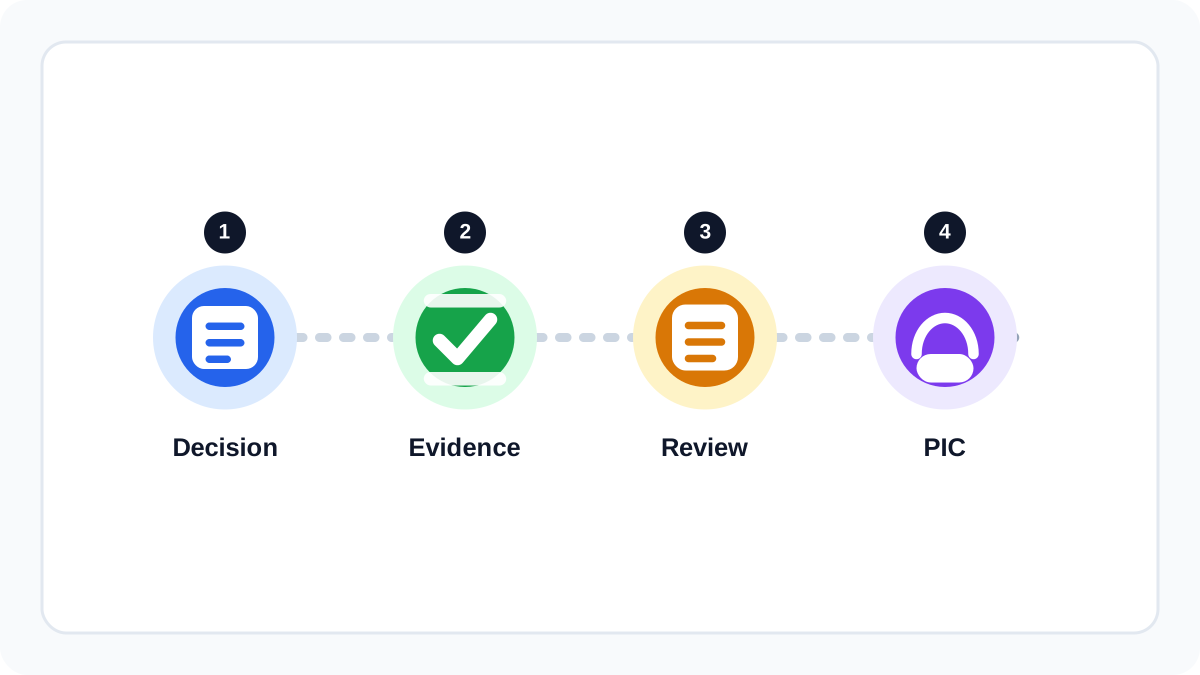
Threshold injury disputes commonly proceed through PIC medical pathways, usually after internal review.
Read: Threshold injury dispute, Internal review, and Merit vs medical assessment.
What usually makes a stronger threshold injury challenge
Threshold injury disputes are usually stronger when the evidence answers the insurer's actual classification reasoning. That often means identifying whether the fight is about diagnosis, causation, objective findings, consistency of symptoms, or whether the injury falls within or outside the statutory threshold categories.
Good files usually include contemporaneous records, targeted specialist opinions where diagnosis is disputed, and a short chronology showing how the symptoms, investigations, and treatment history fit together over time. That tends to carry more weight than broad assertions that the claimant is simply worse than the insurer says.
If the dispute also affects weekly payments, treatment, or later damages access, it helps to link the threshold material back to threshold vs non-threshold injury, threshold injury disputes, IME guidance, and PIC.
Common mistakes in threshold injury disputes
One frequent mistake is relying on pain complaints alone without addressing diagnosis and legal classification. The threshold issue is not decided just by whether the claimant feels significantly affected.
Another problem is sending generic medical letters that repeat symptoms but do not explain why the insurer's threshold reasoning is wrong. If the insurer relies on a particular IME or classification argument, the response should be just as specific.
It also weakens the file when threshold issues are mixed together with earnings or treatment disputes without separating the pathway. Distinct issues can overlap in the same claim, but they still need properly organised submissions and evidence.
Why threshold classification changes the rest of the claim
Threshold classification often looks technical on paper, but in practice it can change the value and direction of the whole claim. It can affect how long statutory benefits continue, how much pressure the insurer applies to treatment and work-capacity issues, and whether the matter later develops into a broader damages pathway.
That is why it helps to treat threshold disputes as part of a larger claim strategy rather than just a one-off medical disagreement. If the insurer is also challenging certificates, weekly payments, or treatment, the threshold evidence needs to be organised so it supports the broader claim without blurring the separate dispute streams.
Useful companion pages include threshold injury explained, weekly payments stopped, treatment refused, merit review vs medical assessment, and case law and decision themes.
Why IME responses and stream selection matter in threshold cases
In many threshold disputes, the insurer is not just applying the legal definition in the abstract. It is relying on a particular IME, a diagnostic assumption, or an argument that the medical material does not support a non-threshold classification. That means the claimant usually needs to answer both the classification issue and the medical reasoning used to support it.
It also matters to keep the stream clear. Threshold disputes often sit in the medical pathway, even when the same claim also involves weekly benefits, treatment, or work-capacity pressure. Better files usually separate those overlapping issues and use IME guidance, merit review vs medical assessment, PIC, and dispute resolution guidance to avoid misframing the escalation.
That kind of separation usually improves both user understanding and the quality of the eventual dispute bundle, especially where the insurer has mixed diagnosis, treatment, and weekly-benefit reasoning together in the same file.
Common classification problems that need a sharper response
Threshold disputes often narrow down to a few repeating issues: whether the diagnosis is actually supported, whether the symptoms are being treated as soft tissue only, whether imaging or specialist evidence points to a non-threshold condition, whether there is an inconsistency in the early records, or whether the insurer is relying on an IME that frames the injury too narrowly.
Those are usually won or lost by precision. A better response identifies the exact classification problem, points to the records that matter most, and explains why the insurer reasoning does not fit the full medical history. General statements that the claimant is in significant pain or has been affected for a long time usually do less work than focused reasoning tied to diagnosis and statutory categories.
Useful companion pages for that exercise include threshold injury explained, threshold vs non-threshold injury, threshold injury dispute guidance, and case law themes.
Evidence gaps that often weaken threshold challenges
Some threshold disputes fail not because the claimant has no real point, but because the file has avoidable gaps. Common examples include missing early GP records, unexplained differences between ambulance, hospital, and later specialist histories, a lack of clear diagnostic framing, or a treating report that describes symptoms without addressing the threshold classification issue directly.
Those gaps matter because insurers and assessors often focus hard on consistency and objective support. If the chronology is messy, if the diagnosis shifts without explanation, or if there is no clean bridge between early symptoms and later specialist opinion, a potentially strong argument can look weaker than it really is.
To tighten the file before review or PIC escalation, it often helps to organise the material around internal review, IME preparation, PIC pathways, and related treatment disputes where the same classification issue is affecting entitlements.
Frequently asked questions
- Is threshold injury the same as WPI?
- No. Threshold injury classification and WPI/permanent impairment are separate concepts used for different entitlement questions.
- Does threshold injury affect weekly payments?
- Threshold injury classification can affect benefit duration. Weekly payments can also be affected by earning capacity decisions and other rules.
- How is threshold injury decided?
- It is evidence-driven and often determined through PIC medical pathways in disputes.
- Do I need internal review first?
- Often yes. Many disputes start with an insurer internal review step.
- Where can I read the definition explanation?
- See our threshold vs non-threshold injury page for a plain-English explanation of the concepts.