
McManus v QBE Insurance (Australia) Limited [2026] NSWPIC 175: single-vehicle crash, sudden medical episode, and no mostly-at-fault finding
This decision matters because it rejects a lazy shortcut. A single-vehicle accident did not automatically establish that the claimant was wholly or mostly at fault where the evidence supported an unexpected medical episode at the wheel.
General information only, not legal advice. The case is useful when insurers treat “single-vehicle” as the end of the enquiry instead of doing a proper fault analysis under ss 3.11 and 3.28 of the Motor Accident Injuries Act 2017.
What happened?
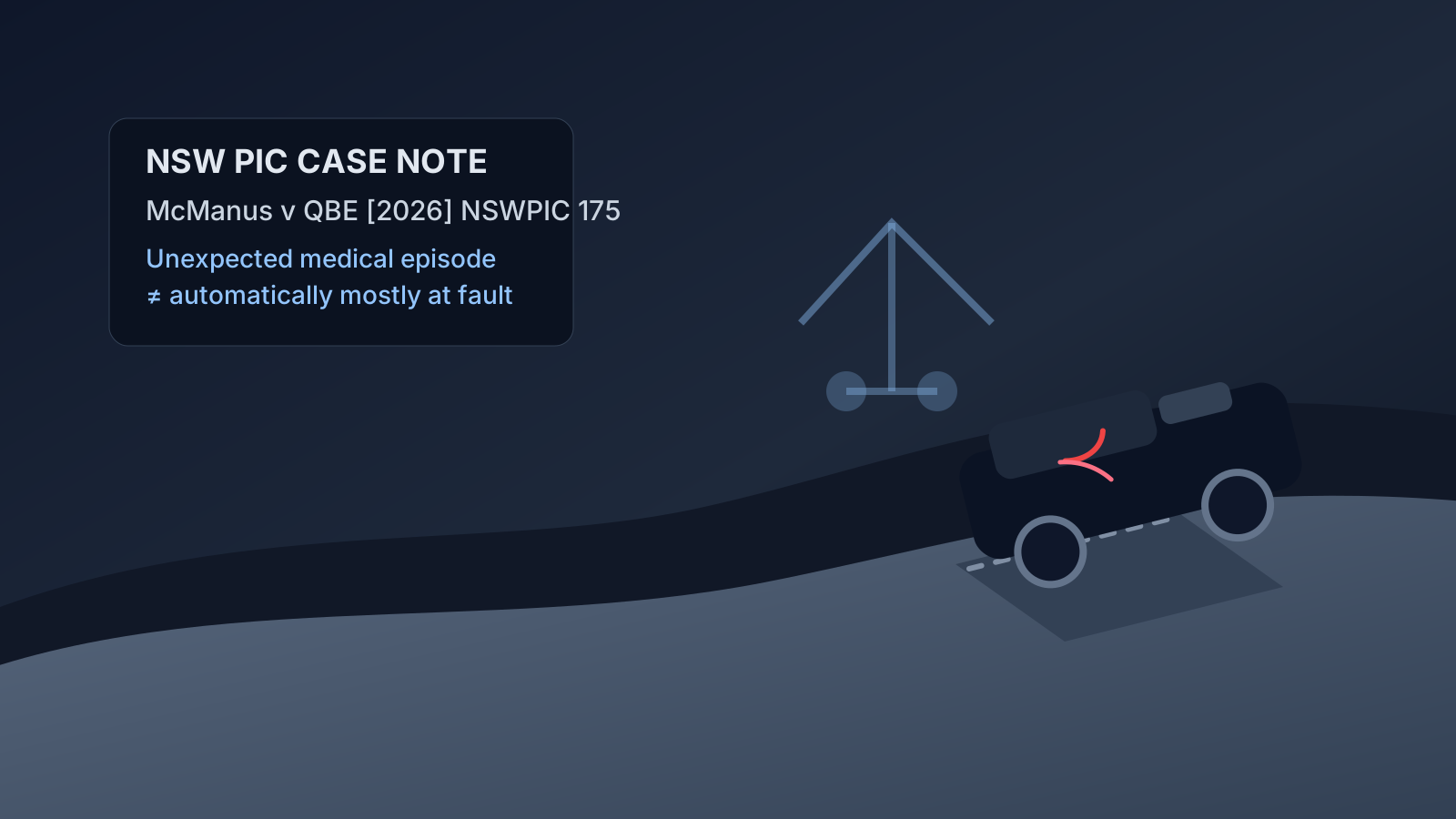
The claimant was driving on a gravel road when his left arm and hand suddenly locked due to a medical episode associated with left cubital tunnel syndrome. He lost control and collided with an embankment, suffering serious injuries.
QBE argued the accident was caused wholly or mostly by the claimant’s fault. The PIC did not accept that position and found the mostly-at-fault threshold was not met.
Why the case matters
For claimants, this is a practical authority against overreach in fault disputes. The decision reinforces that insurers must engage with real causation facts, not just accident format labels.
It can be especially useful where benefits are threatened after 26 or 52 weeks because an insurer has jumped too quickly to a mostly-at-fault conclusion.
What the PIC focused on
- whether the episode was sudden, genuine, and unforeseen at the relevant time
- whether the claimant’s conduct, viewed fairly, met the statutory “wholly or mostly at fault” standard
- whether the insurer’s reasoning matched the actual evidence rather than assumptions from a single-vehicle mechanism
Plain-English takeaway
A single-vehicle crash is not automatic proof that you were mostly at fault. If there was an unexpected medical event, the insurer still has to prove the statutory test properly.
For live disputes, get the chronology tight: pre-accident condition, what happened in seconds before loss of control, and early medical documentation. That evidence quality usually decides these matters.
Frequently asked questions
- What did McManus v QBE [2026] NSWPIC 175 decide?
- The PIC found the crash was not caused wholly or mostly by the claimant’s fault, even though it was a single-vehicle accident, because the evidence supported a sudden and unforeseen medical episode.
- Why is this useful for NSW CTP claimants?
- It pushes back on a common insurer shortcut: “single-vehicle crash means mostly at fault.” The decision shows the real question is whether fault analysis properly accounts for what actually happened at the time.
- Does this case mean every medical-event crash avoids mostly-at-fault findings?
- No. The proposition is narrower. Claimants still need credible medical and factual evidence showing the episode was genuine, sudden, and relevant to loss of control.
- What evidence matters most in this kind of dispute?
- Early records of symptoms, diagnosis history, mechanism detail, and a consistent chronology linking the episode to the crash are usually decisive.
Decision source
Full decision: McManus v QBE Insurance (Australia) Limited [2026] NSWPIC 175.